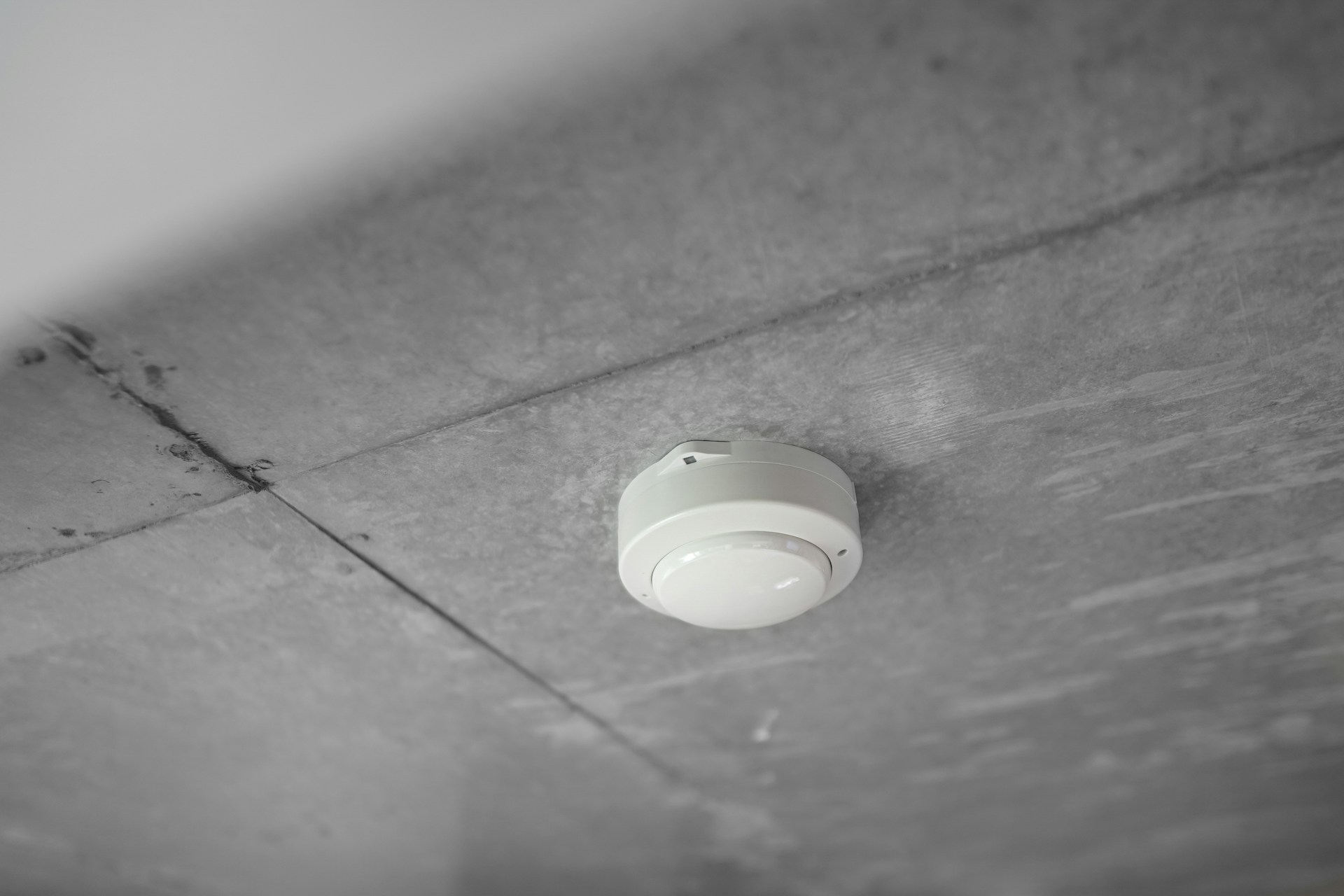
Interconnected smoke detectors are smoke alarms that talk to each other, so when one senses smoke, every alarm in the house sounds at the same time. A fire that starts in the garage at 3 a.m. sets off the alarm outside your kids' bedrooms upstairs as well as the one by the kitchen door. That shared warning is why building codes typically require interconnection in new homes.
If you have ever stood in a hallway and barely heard a single beeping alarm two rooms away, you already understand the problem these alarms solve. This guide explains how linking works, the difference between hardwired and wireless setups, where the rules usually apply, and when it makes sense to go one step further with a monitored system.
What Interconnection Actually Means
A standalone smoke alarm only warns the people close enough to hear it. Interconnected alarms work as a team. Each one still senses smoke on its own, but the moment any alarm trips, it sends a signal to the rest, and they all sound together.
The alarm that detected the smoke usually flashes or uses a different light pattern so you can find the source. Some newer models announce the location out loud, which helps you pick a safe way out instead of walking toward the fire.
Why a single alarm is not enough
Closed bedroom doors, window AC units, ceiling fans and white noise machines all muffle sound. Kids and heavy sleepers are notoriously hard to wake. In a two-story Houston home, a fire in a downstairs living room can push smoke up the stairwell before anyone on the second floor hears an alarm at the bottom of the stairs. Linking puts a loud warning right outside, and ideally inside, every room where someone sleeps.
Hardwired vs. Wireless Interconnected Alarms
There are two ways to link alarms, and both protect your family well when they are installed correctly.
Hardwired interconnection
Hardwired alarms run on your home's electrical power and connect to each other through an extra wire in the ceiling. They include a backup battery, so they keep working when the power goes out, which matters a lot during hurricane season. Most homes built in the last couple of decades already have this wiring in place, and replacing old units is usually a matter of matching the connector.
The trade-off is installation. Adding hardwired alarms to an older home means running cable through finished ceilings and walls, which is a job for a licensed electrician.
Wireless interconnection
Wireless alarms link to each other by radio. They are mounted like any battery alarm and paired, so there is no wiring to run. That makes them a practical choice for older homes, additions, and detached garages or guest suites that never had a signal wire.
Most wireless alarms link to each other directly and do not need your Wi-Fi. Some brands also offer a hardwired alarm with a radio module, so you can extend an existing wired system to a new room without opening the ceiling.
Compatibility is the catch
Interconnected alarms only talk to alarms designed to work with them. Mixing brands, or even different product lines from the same brand, can leave one alarm sitting silent while the rest are sounding. Before you replace a single alarm, check the model number on the back of your existing units and confirm in the manufacturer's instructions that the new one is listed as compatible.
Where Codes Typically Require Interconnected Alarms
Residential codes based on the International Residential Code and NFPA 72 typically require smoke alarms inside each bedroom, outside each sleeping area, and on every level of a new home, and they require those alarms to be interconnected so one activates all of them. New homes usually get hardwired alarms with battery backup.
Existing homes and remodels
Older homes are generally allowed to keep their existing alarms until a significant renovation or addition triggers an update. When that happens, the code may require bringing alarms in the affected areas up to current standards, including interconnection. Where opening ceilings is not practical, many jurisdictions accept wireless interconnection.
Rentals
Texas has its own smoke alarm requirements for residential rentals in the Texas Property Code, and many cities and counties add their own rules. Depending on when the unit was built and how it is laid out, interconnected alarms may be required. Landlords should check with the local building or fire code office, since the Authority Having Jurisdiction always has the final word, and keep a record of when each alarm was tested and replaced.
Getting Placement and Upkeep Right
Linking alarms only helps if each one is in the right spot and still working.
Where alarms belong
Put an alarm in every bedroom, in the hallway outside each sleeping area, and on every level of the home, including a finished attic room or bonus room over the garage. Mount alarms on the ceiling or high on the wall. Keep them back from the stove and away from bathroom doors, where shower steam drifts out. In humid Gulf Coast homes, steam is one of the most common reasons an alarm sounds when nothing is burning.
Monthly testing and the 10-year rule
Once a month, press the test button on one alarm and walk the house. Every alarm should sound. Next month, start from a different alarm, so you know the signal travels in every direction. If one stays silent, it has either lost its pairing, lost its wire connection, or reached the end of its life. For a full routine, see this checklist for home fire alarm testing in Texas homes.
Smoke alarms are typically designed to be replaced 10 years after the manufacture date printed on the back. When one alarm in a linked system is due, it usually makes sense to replace the whole set together so every unit stays compatible.
If you would rather have a licensed technician look after the design, installation and testing, Alarm Masters offers residential fire and security systems built around how your family actually lives.
When a Monitored Fire Alarm System Is the Better Choice
Interconnected alarms are excellent at one job: waking up everyone inside. What they cannot do is call for help. If nobody is home, or the people inside cannot get to a phone, the alarms will sound to an empty house and no fire truck is on the way.
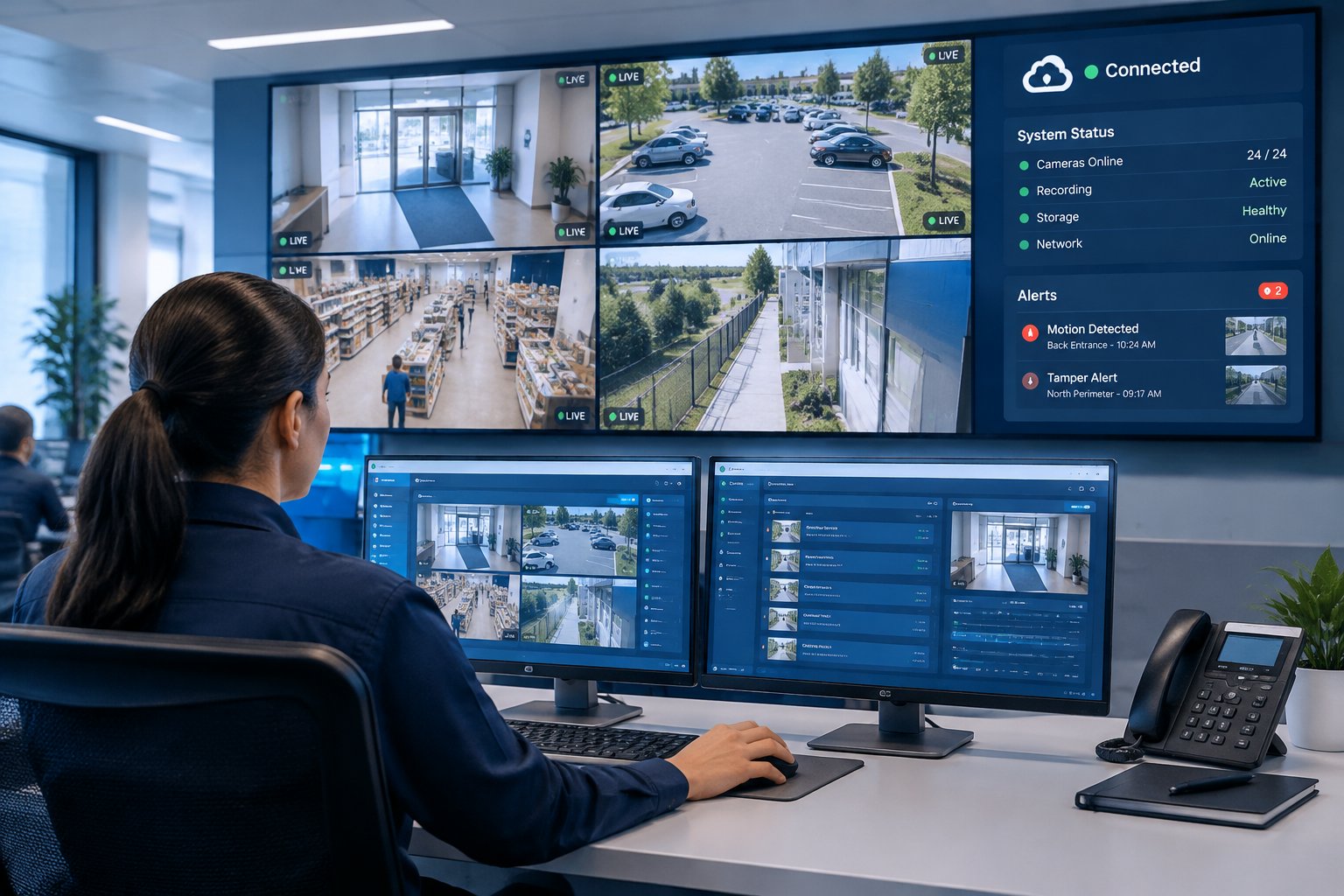
A monitored system closes that gap. Smoke and heat detectors connect to a control panel that sends a signal to a monitoring center around the clock. Operators try to reach you, and if the alarm looks real or nobody answers, they request the fire department. The panel also reports low batteries and trouble conditions, so a failing device gets noticed.
Homes where monitoring makes sense
Monitoring is worth a serious look if you travel often, work long shifts, own a second home or rental that sits empty between tenants, or have a parent living alone who might not be able to get out quickly. It also helps in large homes where a fire in a detached garage or casita could burn for a while before anyone notices. Our guide to monitored fire alarm systems for homes walks through how those systems are set up.
Monitored panels can also connect to apps from partners such as Alarm.com and Honeywell, so you get an alert on your phone the moment something trips, wherever you are.
Get Linked Alarms That Protect Every Room
You want every person in your home to hear the warning, and someone to call for help when you cannot. Alarm Masters has been looking after Houston-area families since 1990, and our licensed technicians can design a home system that links alarms properly and adds 24/7 monitoring if you want it. Call 281-933-3900 or request a free estimate to talk through your home.
Frequently Asked Questions
Can I add one wireless alarm to my hardwired system?
Sometimes. A few manufacturers make hardwired alarms with a radio module that can talk to their own wireless units. Without that bridge, a wireless alarm will not communicate with your wired alarms, so check the product line before you buy.
Do interconnected smoke detectors use a lot of electricity?
No. Hardwired smoke alarms draw very little power, and wireless alarms with sealed batteries do not touch your electric bill at all. The bigger cost over time is replacing units at the end of their service life.
What happens to hardwired alarms during a long power outage?
They switch to their backup batteries and keep sensing smoke and sounding. That is why it matters to keep backup batteries fresh, or choose units with sealed long-life batteries, before storm season starts.
Should carbon monoxide alarms be interconnected too?
If your home has gas appliances, a fireplace or an attached garage, combination smoke and CO alarms that link together are a smart choice. They usually use a different tone or a spoken message for CO so you can tell the two warnings apart.
Why does one burnt piece of toast set off every alarm in the house?
Because they are linked, the alarm nearest the kitchen tells the others to sound. Moving that alarm a few more feet from the stove, cleaning dust out of it, or replacing an aging unit usually fixes repeat nuisance alarms.