.svg)
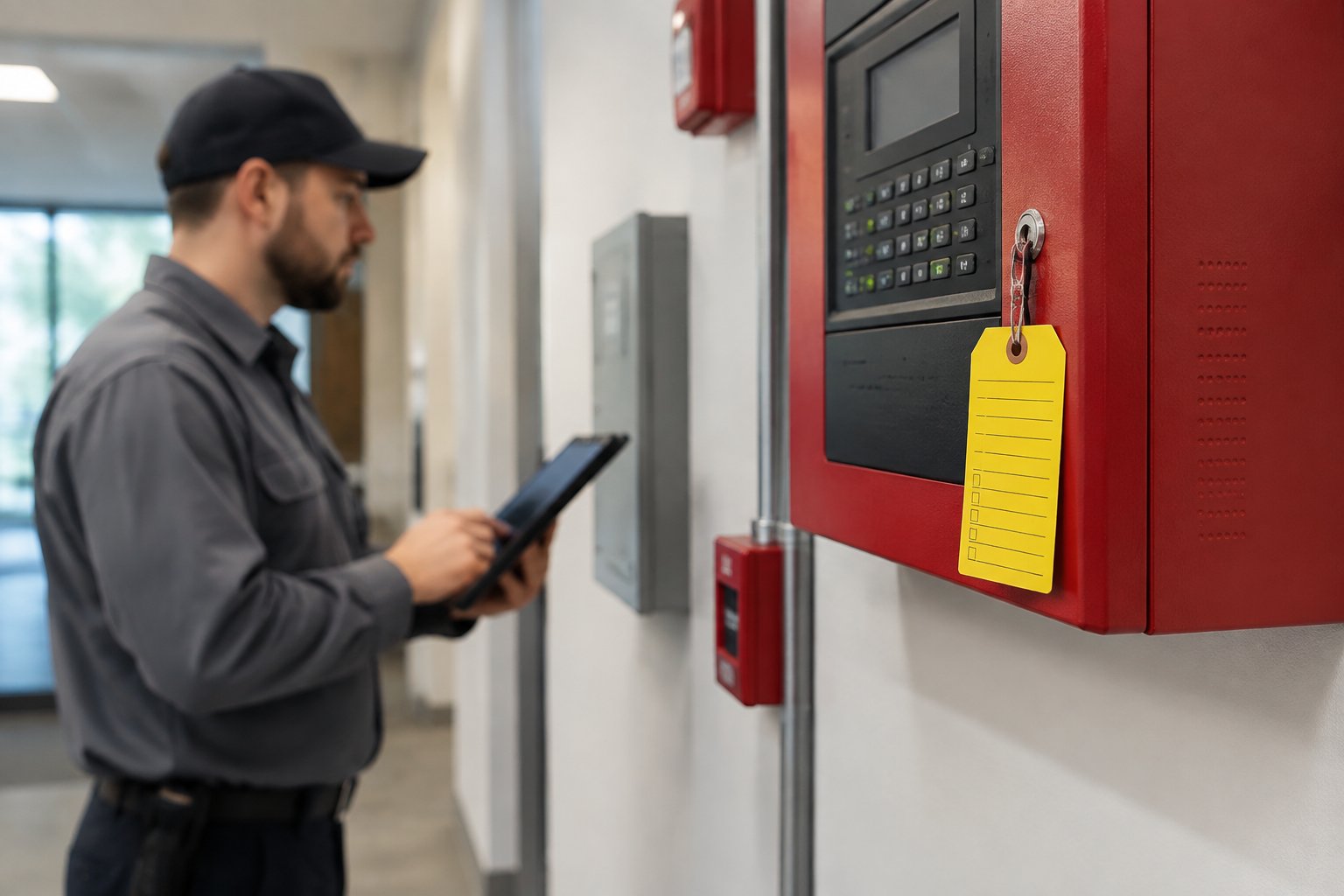
You walk past the fire alarm panel during a routine check and spot a bright yellow label hanging off the cover. It wasn't there last month. Now you're wondering if your building is out of compliance, whether tenants are at risk, and how fast the Fire Marshal expects it fixed.
A fire alarm yellow tag a Texas property owner finds after an inspection isn't a citation, but it signals something needs attention before it becomes one. Houston commercial buildings, from strip centers to warehouses, get tagged every day for missed testing windows, aging devices, or paperwork gaps. Knowing what the label actually says, and what Texas law requires next, keeps a manageable issue from turning into a liability problem.
Alarm Masters has spent more than 35 years working on Texas fire alarm systems, and clearing tagged panels is routine work for our licensed technicians. Here's what a yellow label means versus a red one, the exact steps to take after each, who is legally allowed to remove a label, and how your system gets documented as compliant again.
What Does a Yellow Label on a Fire Alarm Mean?
A yellow label means your fire alarm system still works, but it doesn't meet the codes and standards it's supposed to meet. It is a compliance flag, not a functionality failure.
Texas licensed inspectors use a color-coded system to communicate a fire alarm system's condition at a glance. The yellow label is reserved for noncompliant issues that could affect system performance in an emergency, even though the system is still operating. Common triggers include missing devices, improper device placement, occupancy changes, or lapses in required testing.
Texas regulators are specific about when a yellow label applies. It's worth clarifying because it clears up a common misconception among Houston property owners.
What the Yellow Label Tells You About Code Compliance
The label does not mean your building automatically has to meet the newest code edition. The Texas State Fire Marshal's Office states that a yellow label is not required just because an existing system falls short of current code, unless the local authority having jurisdiction specifically requires the upgrade, according to Texas Department of Insurance guidance. The label targets issues that could impact the system's ability to respond quickly, not every gap versus a modern rulebook.
That distinction matters for older Houston buildings. A system installed in 1998 is not automatically out of compliance in 2026 just because NFPA 72 has been revised since then. Your fire alarm company is responsible for confirming with the Houston Fire Department what applies to your specific occupancy.
How a Red Label Signals an Impaired or Out-of-Service System
A red label is a different situation. It means the system, or part of it, is inoperable, has a fault condition, or is impaired from normal operation, as defined under 28 Texas Administrative Code 34.624. This is the label that requires immediate notification, not just scheduled repair.
Knowing the difference between these two labels shapes everything that happens next, starting with how urgently you need to act.
What Should You Do After a Yellow Label?
Your first move after a yellow label is to read the deficiency documentation the inspector left behind, then get repairs scheduled with a licensed fire alarm company. The clock starts the moment the label goes up.
Houston facility managers sometimes treat a yellow label as a low priority because the system is still working. That mindset creates real exposure. If a fire occurs while a known deficiency sits unresolved, insurers can scrutinize the claim, and the Houston Fire Department can escalate an unresolved tag into fines during a follow-up audit.
Read the Deficiency List and Inspection Report
Every yellow label includes a written explanation of what triggered it. The inspector must document the specific conditions, not just note that something failed.
Read this list carefully before assuming what needs fixing. Deficiencies can range from a single obstructed smoke detector to a missing test certificate, and each has a different repair path and cost. A licensed fire alarm inspection team can walk the deficiency list with you before any repair work starts.
Schedule Repairs and Confirm Whether Interim Measures Are Needed
Once you know what's wrong, get a licensed technician scheduled to make the correction. Most yellow-label issues can be resolved without shutting down operations, but a few steps make the process smoother:
- Confirm your monitoring company knows a compliance issue is active so alarm signals during repair work aren't misread.
- Ask the technician whether any interim safety measure is needed while parts are on order.
- Get a firm date for the correction, since service labels and revised documentation depend on it.
A yellow label rarely forces you to close your doors, but a red label is a different conversation entirely.
What Should You Do After a Red Label?
A red label means part of your fire alarm system cannot be trusted to work in an emergency, and Texas law requires the technician to notify you and the local fire authority right away. This is not a repair you schedule for next month.
Under 28 TAC 34.624, if the system is fully inoperable, the licensee must orally notify the property owner and the local authority having jurisdiction immediately, followed by written notice within the next business day. If the system has a fault condition or is impaired rather than fully down, written notice is still required within three business days.
Contact the Fire Alarm Company and Local Fire Authority Promptly
Do not wait for the fire alarm company to circle back on their own schedule. As the property owner, confirm that both the written notice to you and the notice to the Houston Fire Department have been sent.
- Get the technician's contact information and a copy of the red label conditions in writing.
- Ask directly whether the local fire authority has been notified yet, and when.
- Request a repair timeline, since red labels must stay in place until corrections are verified.
Ask Whether a Fire Watch or Other Interim Protection Is Required
A fire watch means trained staff patrol the building on a set schedule, watching for signs of fire while the alarm system is impaired. Local fire authorities decide whether a fire watch is required based on occupancy type, building size, and the repair duration.
For a Houston warehouse or a multi-tenant office building, a fire watch can add labor costs during the repair window. Getting the repair scheduled quickly is often the more practical way to shorten that requirement, which is where the next step comes in.
Who Can Clear a Label, and How Is the System Documented?
Only a licensed fire alarm employee or an authorized government representative can attach, revise, or remove a yellow or red label. A building engineer or property manager can't do this themselves, even if the repair looks simple.
Texas regulates this tightly because the label is a legal certification, not a sticker. Whoever removes it is putting their license behind the claim that the system is fixed.
Who May Attach, Revise, or Remove a Fire Alarm Label?
A yellow label may be removed by a licensed employee or agent of a registered fire alarm firm, an employee of the State Fire Marshal's Office, or an authorized representative of a government agency with regulatory authority, according to 28 TAC 34.623. The same rule applies to red labels under 34.624. A property owner, tenant, or unlicensed contractor cannot legally remove the label, even after the repair is complete.
This rule protects Houston building owners as much as it restricts them. It means every removed label creates a paper trail back to a licensed individual accountable for the work.
When Must the Local Fire Authority Receive Written Notice?
The local authority having jurisdiction must be notified any time a label is removed or revised, not just when it's first attached. For red labels, that notice must go out within five business days of removal, per 34.624. For yellow labels, notification is required whenever corrections are made, under 28 TAC 34.623.
This paper trail matters during insurance reviews and city audits. A Houston property with documented notices to the fire authority looks materially different to an underwriter than one with a gap in its compliance history.
How Repairs, Retesting, and a New Service Label Close the Issue
Once repairs are verified, the technician attaches a white service label documenting what was done and referencing the yellow or red label it replaces, as outlined in 28 TAC 34.621. That service label must stay in place for at least two years before it can be removed.
With the paperwork closed out and the local authority notified, the remaining step is getting the physical repair done the first time correctly.
Get the Fire Alarm Repaired and the Label Resolved
Closing out a fire alarm yellow tag Texas violation comes down to one thing: getting a Texas-registered fire alarm firm to make the correction and file the right documentation. Skipping steps here just delays the inevitable and adds risk in the meantime.
Our technicians at Alarm Masters hold both the state licensing and the local Houston knowledge to move a tagged panel through inspection, repair, and re-certification without guesswork. Backed by a 48-hour service guarantee, our team prioritizes tagged systems because every day a label stays up is a day of unresolved liability sitting on your property.
Getting this handled fast protects more than your compliance record. It protects the people inside the building and shields you from the insurance and legal exposure that follows an unresolved tag if something goes wrong.
Request a commercial fire alarm inspection in Texas from Alarm Masters, and our licensed team will review your deficiency report, walk you through the repair, and file the paperwork to clear your label with the local fire authority.
Frequently Asked Questions
Can My Building Stay Open With a Yellow Fire Alarm Label in Texas?
Yes, in most cases. A yellow label means the system still functions but does not meet applicable code, so the building generally stays operational while repairs are scheduled. The local fire authority can require additional steps depending on occupancy type.
Does a Yellow Label Mean My Fire Alarm Is Out of Service?
No. A yellow label flags a compliance issue, while a red label indicates the system is impaired or inoperable. If your system carries a yellow label, it is still expected to detect and signal a fire, just not to current code standards.
Who Decides Whether My Houston Property Needs a Fire Watch?
The local fire authority having jurisdiction makes that call, typically after a red label goes up on an impaired system. The decision depends on building occupancy, size, and how long the repair is expected to take.
Can a Property Owner Remove a Yellow or Red Fire Alarm Label?
No. Only a licensed employee of a registered fire alarm firm, a State Fire Marshal's Office employee, or an authorized government representative can remove a label under Texas rule. If a property owner or general contractor removes it themselves, the building will lack a valid compliance record.
How Do I Verify That a Texas Fire Alarm Company Is Licensed?
Ask the company for its Certificate of Registration number issued by the Texas State Fire Marshal's Office, and confirm the technician also holds an individual license. Both the firm and the person doing the work need active credentials before they touch your panel.




.svg)


.svg)