A fire that starts after hours or in an empty part of a building can grow for a long time before anyone notices. A central station fire alarm system is a fire alarm system that is monitored 24/7 by a professional central station, which receives alarm, trouble and supervisory signals and calls the fire department and your contacts when something happens. It pairs detection on site with trained people ready to act, day and night.

For businesses and homes across greater Houston, central station monitoring is a reliable line of defense. The system detects a problem quickly and the central station relays it to the fire department, so help is on the way even when nobody is on site. Understanding how it works helps you see why it is required for many commercial buildings and worth having for many homes.
Below, you will learn about the components, the types of signals, the standards that apply and how to choose a monitoring provider.
Understanding Central Station Fire Alarm Systems
Central station fire alarm systems protect commercial and residential properties by linking on-site detection to a monitoring center that can respond to emergencies.
Components and Functionality
A typical central station fire alarm system includes several key components:
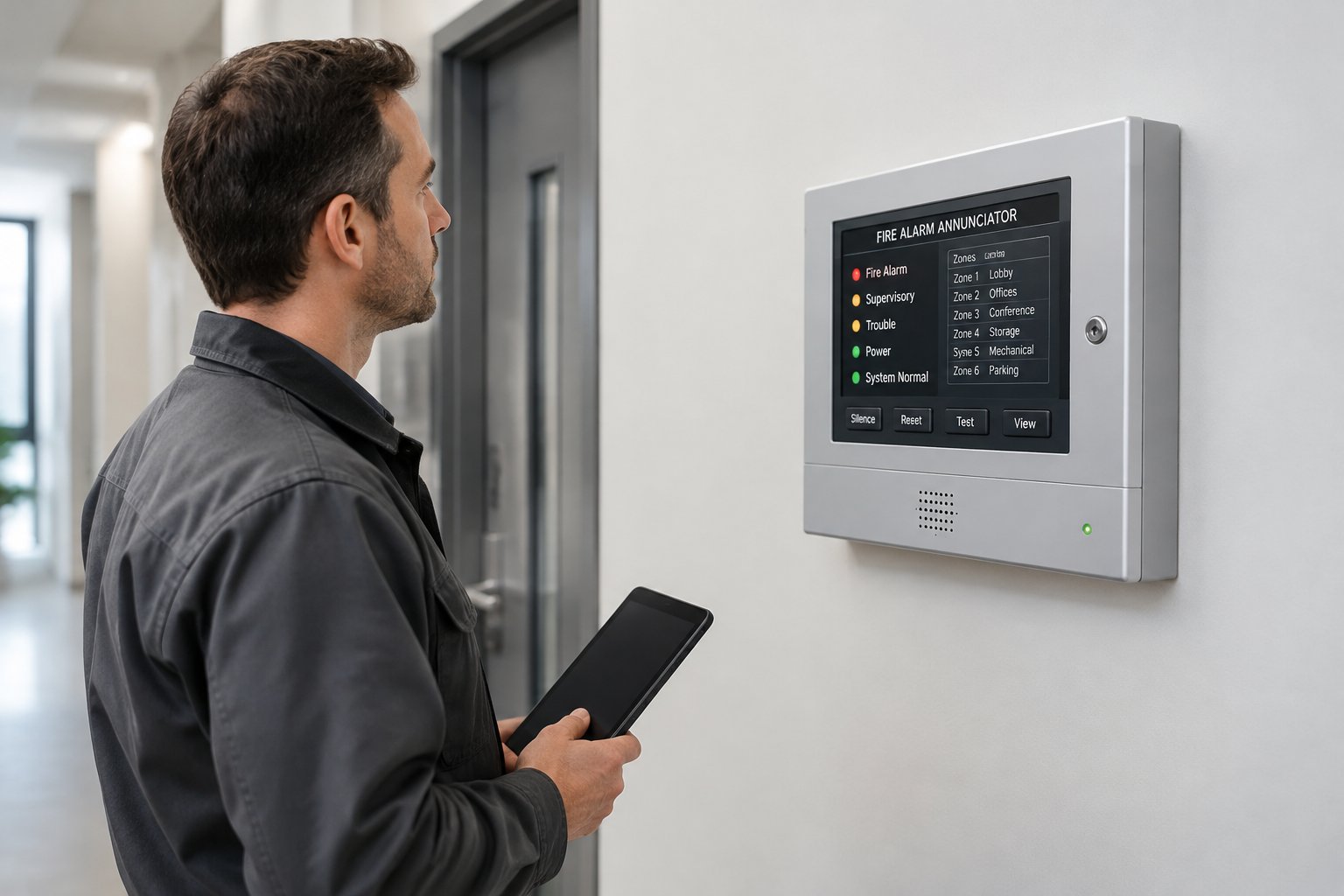
- Control Panel: This is the brain of the system, where all alarms and signals are processed. Here, you can monitor the status of each device.
- Alarm Devices: Smoke detectors, heat detectors, and manual pull stations that trigger alarms when smoke or fire is detected.
- Supervisory and Trouble Monitoring: The system watches sprinkler valves, wiring, power and batteries and reports anything that could affect protection.
- Communicator: Sends signals from the panel to the central station, today usually over a cellular communicator, often with a second path for backup.
When any alarm or trouble signal is activated, your control panel alerts the central monitoring station for immediate action. This allows for a quick response to emergencies and helps limit damage.
Central Station Monitoring
Central monitoring stations provide 24/7 monitoring of fire alarm systems. They are staffed by trained professionals who can immediately respond to alarm signals.
When an alarm is received, the monitoring team assesses the situation. They identify the type of signal, whether it is a fire alarm, a supervisory condition or a trouble signal from a malfunctioning device.
Fire alarms are dispatched to the fire department right away, while trouble and supervisory signals are reported to you or your service company so problems are fixed quickly. The central station also expects regular test signals from your panel, so a communicator that goes silent gets noticed.
How Signals Reach the Monitoring Center
Your fire alarm control panel sends signals to the central station over cellular networks, the internet or, on older systems, telephone lines. Traditional copper phone lines are being retired across the country, so many buildings are upgrading to cellular communicators, often with a second path for reliability. The monitoring center uses software that can track many incoming alarms at once, so every signal gets handled quickly.
Types of Fire Alarm Signals
Knowing the different types of fire alarm signals helps you respond correctly. These signals provide information about the status of the fire alarm system and any potential issues that may arise.
Fire Alarm Signals
Fire alarm signals are the most critical notifications generated by the system in response to actual fire events. When an initiating device, such as a smoke or heat detector, detects danger, it sends an alarm signal to the central monitoring station.
These signals are prioritized and prompt immediate action, typically the dispatch of emergency services. In a fire, every minute matters, and these signals are designed to communicate the emergency fast.
Some common initiating devices include:
- Smoke Detectors
- Heat Detectors
- Manual Pull Stations
- Water Flow Sensors
Each device plays a part in identifying and communicating fire risks quickly.
Trouble and Supervisory Signals
In addition to fire alarm signals, systems also generate trouble and supervisory signals. Trouble signals indicate a malfunction or issue within the alarm system, such as a cut wire or low battery.
These signals tell you the system may not be fully able to protect you. If you receive a trouble signal, have it investigated and repaired promptly.
Supervisory signals report off-normal conditions on fire protection equipment, such as a closed sprinkler control valve or low air pressure on a dry pipe system. They help keep your fire protection fully operational and in compliance with local codes.
Regulatory Compliance and Standards
Standards make central station fire alarm systems dependable. Following them helps your system work correctly and get a reliable response in an emergency. The key requirements come from NFPA and UL, along with the codes your local fire marshal enforces.
NFPA 72 and UL Standards
NFPA 72 outlines the National Fire Alarm and Signaling Code, which establishes minimum requirements for fire alarm systems. This code specifies installation, performance, and maintenance practices to ensure the reliability and safety of alarm systems.
Underwriters Laboratories (UL) certifications verify that fire alarm systems meet rigorous safety standards. A UL certification indicates that your fire alarm equipment has undergone extensive testing, ensuring its operation in emergency situations. UL also lists central stations themselves, which tells you the monitoring center meets strict requirements for staffing, redundancy and record keeping.
Inspection and Maintenance Requirements
Regular inspections and maintenance keep your fire alarm system working. NFPA 72 mandates periodic testing and maintenance checks to uphold system reliability. Typically, inspections are required annually, while visual checks may be performed more frequently.
Use a licensed fire alarm company for inspections. In Texas, that means a company licensed by the State Fire Marshal's Office. Technicians test control panels, detectors, notification appliances and monitoring connections. Documentation of inspections and maintenance activities shows compliance to your fire marshal and insurer and keeps your system up to date with code requirements.
Integration with Emergency Response
The link between your fire alarm system and emergency responders is what makes central station monitoring valuable. Here is how it works.
Fire Department Notification
When a central station fire alarm system detects a fire, the panel automatically sends the signal to the central station, and an operator notifies the fire department without waiting for someone on site to call 911.
Key components of this process include:
- Automation: The alarm reaches the central station without anyone having to notice it first.
- Clear Information: Addressable systems report the exact device and location, which the operator passes on to responders.
- Direct Communication: Central stations have established procedures for contacting the fire department that serves your address.
Faster notification means firefighters can get there sooner, which helps limit damage and protect occupants.
What Operators Do When an Alarm Comes In
When the central station receives a fire alarm signal, a trained operator reviews it, including the location and type of alert and any recent signals from the same site. Once the alarm is confirmed, the operator contacts emergency responders and passes along the details they need, such as the nature and location of the alarm.
Operators may also call keyholders or on site staff so the right people at your property know what is happening. This combination of fast dispatch and direct communication is what makes central station monitoring so effective.
Emergency Response and Fire Department Response Time
Fire department response time has a big impact on how much damage a fire does. A central station fire alarm system helps by shortening the time between detection and the call for help.
Several factors play a role in this:
- Location of the Incident: Proximity of the fire department to your facility affects how quickly they can arrive.
- Accurate Information: Central stations pass on the type of alarm and its location, so responders know where to go.
- Preparedness: Clear evacuation plans and up-to-date contact lists help your team act while help is on the way.
A reliable, monitored fire alarm system makes the most of those minutes when every second counts.
Enhancing Fire Safety
Monitoring works best as part of a complete fire protection plan that includes detection, sprinklers and integrated security.
Smoke Detectors and Sprinkler Systems
Smoke detectors are essential for early fire detection, giving you valuable time to react. Detectors use photoelectric or ionization sensing (and some combine sensors), each suited to different types of fires.
Sprinklers work alongside the fire alarm system. Each sprinkler head opens on its own when it is heated, controlling the fire before it spreads, and the fire alarm system monitors the water flow and valves so a flowing sprinkler is reported to the central station as an alarm.
Benefits of integrating smoke detectors and sprinkler systems:
- Early detection leads to quicker evacuation.
- Sprinklers minimize fire spread, reducing risk.
- Many insurers offer better rates for monitored systems; ask your agent.
Security Systems and Monitoring Services
Integrating security systems with fire protection gives you a coordinated response to emergencies. These systems can include video surveillance and access control features.
Monitoring services provide continuous oversight of your fire alarm systems. With 24/7 monitoring, trained professionals act as soon as alarms are triggered, which can make a real difference in limiting damage.
Key features to consider:
- Remote access lets you see system status and events from your phone.
- Trained personnel respond immediately to alerts.
- Regular system checks ensure reliability and compliance with safety regulations.
Choosing a Central Station Monitoring Provider
The provider you choose matters as much as the equipment. Before you sign, check a few key points:
- UL listing: Confirm the central station is UL listed, which signals that it meets strict standards for signal handling, backup systems and record keeping.
- Response process: Ask how alarms, supervisory and trouble signals are handled, and who gets called.
- Around the clock coverage: Monitoring and customer support should be available 24/7.
- Added services: Ask whether they also handle inspection, maintenance and repair, so one company owns the whole system.
- Licensing and takeover: Confirm the company holds a Texas fire alarm license and can take over monitoring of your existing panel.
Frequently Asked Questions
You may have several questions about central station fire alarm systems. Understanding the differences from other alarm systems and how they operate can help you make informed decisions about fire safety for your property.
How does a central station fire alarm system differ from a burglar alarm?
A central station fire alarm system is designed to detect fire and smoke, while a burglar alarm protects against unauthorized entry. Both can be monitored by a central station, but fire alarm systems follow separate codes and licensing, and commercial fire alarm equipment must be listed for fire use.
What distinguishes a central station fire alarm from a local fire alarm system?
A local fire alarm system sounds alarms on-site but does not notify external monitoring centers. In contrast, a central station fire alarm immediately connects to trained professionals who can relay alerts to local fire departments, which speeds up the response in an emergency.
Which companies provide central station alarm monitoring services?
Look for a licensed fire alarm company that uses a UL listed central station, has good reviews and can also inspect and service your system. In the greater Houston area, Alarm Masters provides 24/7 fire alarm monitoring and can take over monitoring of an existing system, often by adding a cellular communicator.
Can you provide an example of a central station fire alarm system in use?
Many commercial buildings in Houston use central station fire alarm systems. For instance, office complexes often rely on these systems for comprehensive fire safety, ensuring that alarms are monitored continuously and that alerts are sent promptly when needed.
How does a centrally monitored fire alarm system function?
A centrally monitored fire alarm system works by connecting your fire detection devices to a monitoring center. When a device detects smoke or heat, an alert is sent to the central station, which then notifies the fire department and your contacts for a fast, effective emergency response.
Ready to set up or switch monitoring? Alarm Masters designs, installs, monitors and inspects fire alarm systems across greater Houston under Texas Fire Alarm License #ACR-1975. Request a free estimate or call 281-933-3900.