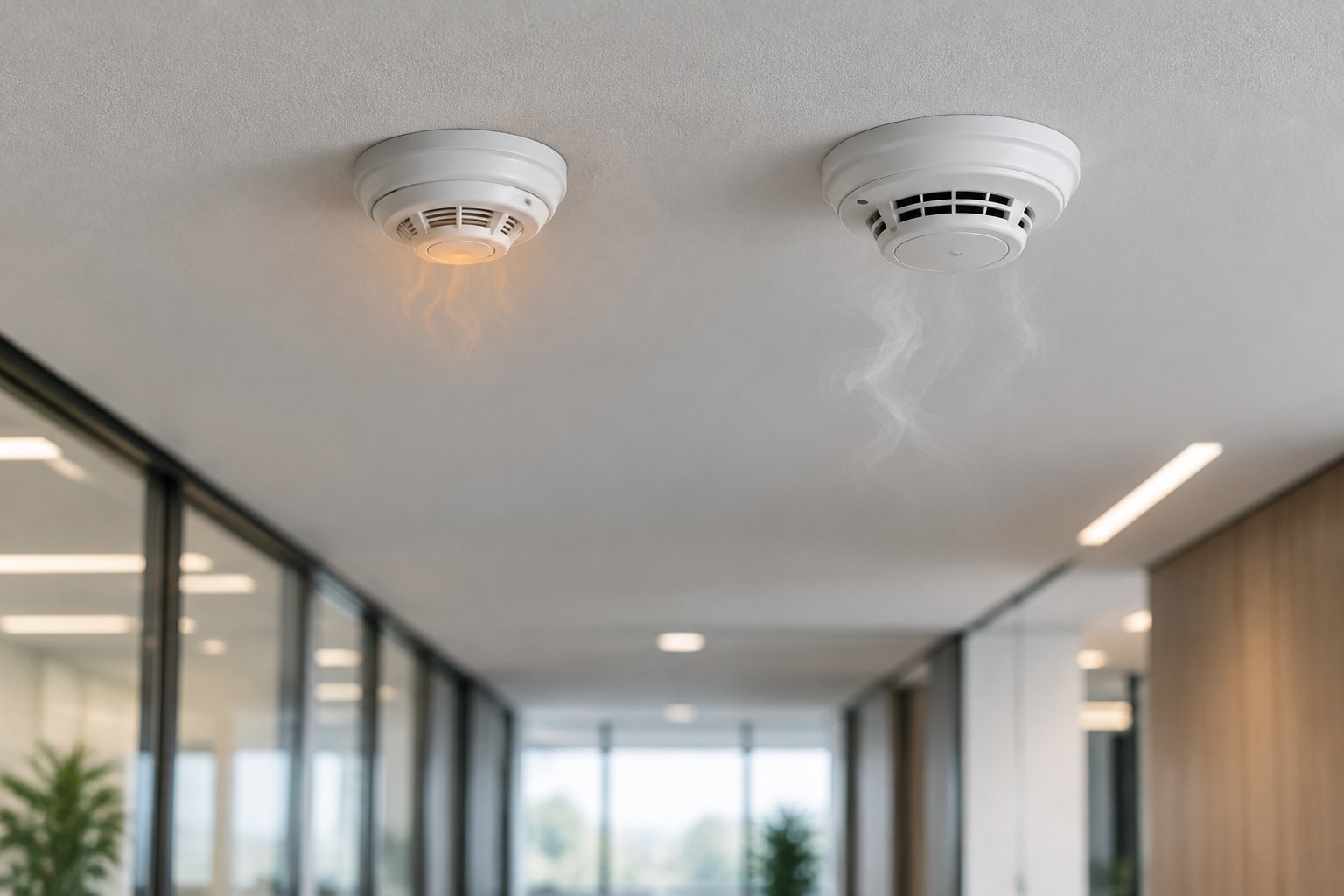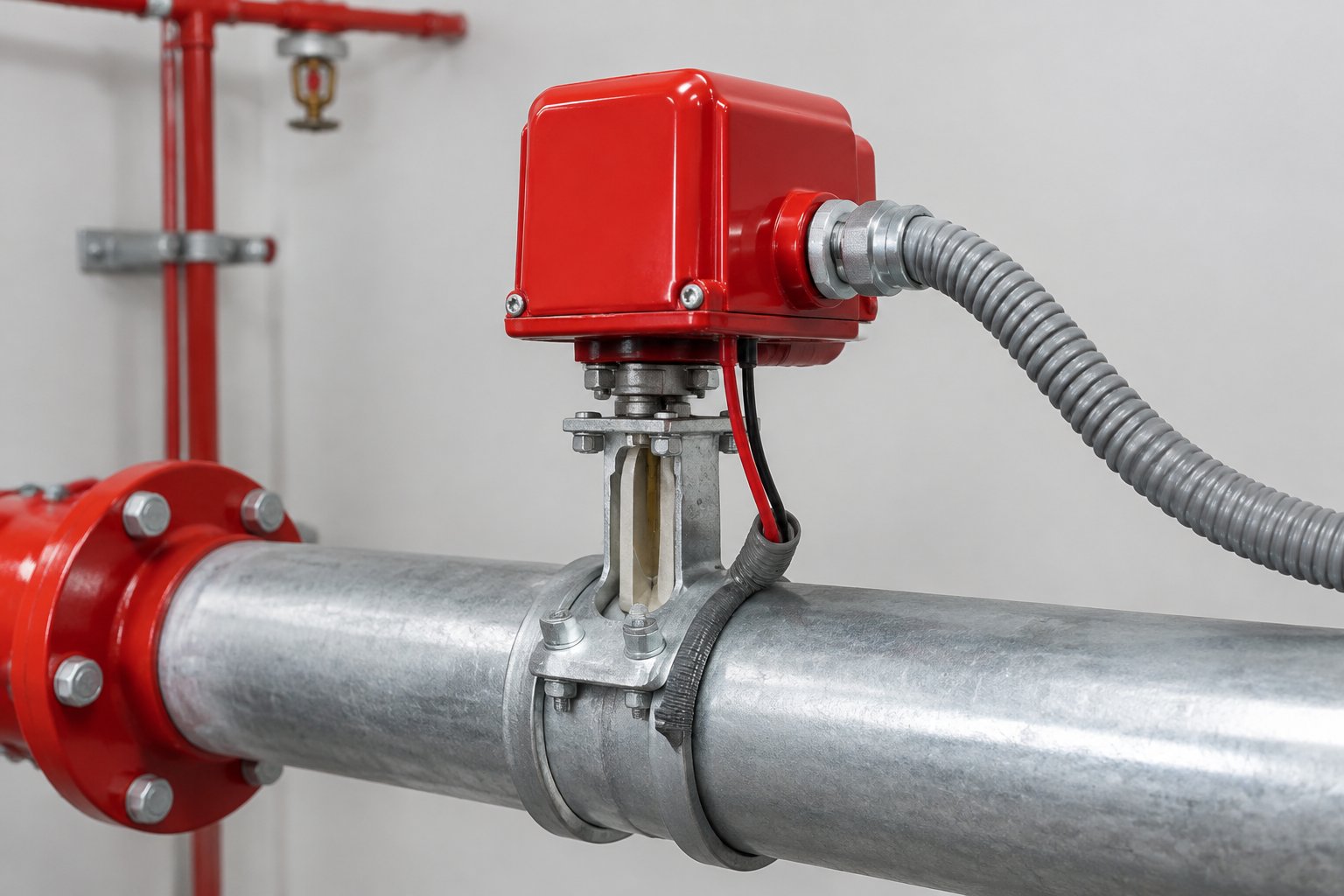
A waterflow switch is the device on your sprinkler piping that tells the fire alarm panel water is moving through the system. When a sprinkler head opens, the switch senses the flow, waits through a short delay to rule out a pressure blip, then closes its contacts and sends a fire alarm signal. The panel sounds the building alarm and, if the system is monitored, the signal goes to a central station that calls the fire department.
Sprinklers will fight a fire without any electrical help. What they cannot do on their own is warn the people inside or summon help. The waterflow switch is the link that turns a discharging sprinkler into an evacuation and a dispatch, which is why fire marshals and insurers pay close attention to how it is chosen, set and tested.
How a Waterflow Switch Triggers the Fire Alarm
Most commercial buildings in Greater Houston use wet-pipe sprinklers, where the pipes stay full of water under pressure. Nothing moves until a head opens. Once heat breaks a glass bulb or fusible link, water starts discharging and pulls fresh water through the riser and floor control assemblies where the switches sit.
What happens inside the switch
On the common vane-type unit, a flexible paddle sits inside the pipe. Flowing water deflects the paddle, which moves a lever in the switch housing and starts a timer. If flow continues after the timer runs out, a set of dry contacts changes state. Vane switches are designed to respond to roughly the flow of a single sprinkler head, so one open head is enough to trip them.
From the contacts to the fire department
The contacts connect to the fire alarm panel, usually through an addressable monitor module that gives each switch its own label, such as "Waterflow, 3rd Floor Control Valve." That label tells responders which zone of the building is flowing. The panel then activates horns and strobes and transmits the alarm off site.
Because water already reaches the fire through the sprinklers, the alarm side is about people and response time. Good fire alarm and sprinkler integration makes sure every switch reports as a waterflow alarm (not a trouble or supervisory event) and that each one is labeled to match the real floor or area it serves.
Vane-Type vs. Pressure-Type Waterflow Switches
There are two main ways to detect flow, and the right one depends on the type of sprinkler system you have.
Vane-type switches for wet-pipe systems
A vane switch mounts through a hole drilled in the pipe and is held by a saddle clamp. It senses water movement directly, which makes it the standard choice on wet-pipe risers and floor control valves in offices, apartment buildings, hotels and warehouses.
Vane switches are sized to the pipe. A paddle cut for the wrong diameter can drag on the pipe wall or miss part of the flow. The housing also carries an arrow that has to point in the direction of water flow, and manufacturers specify how far the switch must sit from fittings, valves and drains so turbulence does not cause false readings.
Pressure-type switches for dry and preaction systems
A pressure-type switch senses a rise in pressure instead of movement. It typically connects to the alarm port of an alarm check valve, a dry-pipe valve or a preaction valve. When the valve opens, water enters that alarm line and pushes against a diaphragm that trips the switch.
Vane switches are not suited to dry-pipe and preaction systems. When one of those valves trips, water slams into empty pipe hard enough to damage or tear loose a paddle. A pressure switch on the alarm line handles that surge.
Listings matter
Whatever the type, the switch must be listed for fire sprinkler service and installed per the manufacturer's instructions. A general-purpose industrial flow switch is not acceptable on a fire protection system, and your Authority Having Jurisdiction (AHJ) will reject it at inspection.
Why Waterflow Switches Have a Retard Delay
A sprinkler system is connected to city water, and city water pressure moves around all day. A surge can nudge a paddle or push a little water into an alarm line without any sprinkler opening. The retard delay is the built-in wait that filters those surges out.
How the delay works
On a vane switch, the retard is a mechanical or electronic timer, usually adjustable over a range of roughly 0 to 90 seconds. The paddle has to stay deflected for the whole delay before the contacts close. If the flow stops first, the timer resets and nothing is reported. On alarm check valves, a retard chamber does a similar job ahead of the pressure switch.
The 90-second ceiling
NFPA 72 requires a waterflow alarm signal at the panel within 90 seconds of a flow equal to the smallest sprinkler on the system. That sets the upper limit. Turn the retard up too far and the switch can fail that test. Turn it too low and every surge becomes a fire alarm.
Where pressure surges come from
Houston-area buildings see a few repeat offenders:
- City main work, a nearby water main break or a hydrant being flushed on the street.
- Fire pump starts during weekly or monthly churn tests.
- Booster pumps or backflow assemblies that let pressure swing on taller buildings.
- Trapped air in the system that compresses and rebounds when pressure changes.
- An excess pressure pump that has failed, letting the system follow every swing in supply pressure.
If your building gets waterflow alarms with no water on the floor, the pattern usually points to one of these. A timer set at zero, a switch mounted too close to a check valve, or a failed excess pressure pump are common finds. If your waterflow alarms keep coming in at odd hours, our guide to fire alarm system false alarm issues covers how to track down the cause.
Common Waterflow Switch Problems
Most waterflow switch failures fall into two groups: switches that alarm when they should not, and switches that stay silent when water flows. The second group is the dangerous one, because nobody notices until a test or a real fire.
Switches that alarm with no fire
Besides pressure surges, false waterflow alarms come from leaks. A slow leak at a sprinkler head, a cracked fitting above a ceiling or a dripping inspector's test valve can keep the paddle moving long enough to beat the retard. Sprinkler work is another cause: a contractor refills a riser after a head replacement, water rushes in, and the switch reports flow before anyone called the monitoring center.
Switches that fail to alarm
Paddles crack, bend or get coated with scale and debris over the years. Pressure switch lines clog. Retard timers stick. A switch installed backward or on a section of pipe with the wrong flow direction may never trip at all.
Corrosion is a bigger factor here than in drier climates. Riser rooms and exterior valve enclosures in Houston stay warm and humid, and moisture that gets past a loose cover attacks terminals and contacts.
Wiring and panel issues
The circuit between the switch and the panel is supervised, so a cut or loose wire usually shows as a trouble. A switch that is wired but programmed as the wrong signal type is harder to spot. If a waterflow switch reports as a supervisory event, the building will not evacuate when it should. This is one reason the signal type gets checked at every test.
Many of these problems only show up when water actually flows, so a building that has not had a proper flow test in a while may be carrying a failure nobody has seen. Alarm Masters' licensed technicians handle waterflow testing as part of a full fire alarm inspection and testing visit, with results documented for your fire marshal and insurer.
How Waterflow Switches Are Inspected and Tested
NFPA 25 sets the inspection, testing and maintenance schedule for sprinkler systems, and NFPA 72 covers the fire alarm side. Vane and pressure-type waterflow alarm devices are typically tested twice a year, with visual inspections on a more frequent schedule. Your AHJ and your insurer may add their own requirements.
Before the test
The technician calls the monitoring center to place the account on test so a real dispatch does not go out. Building staff and tenants get notice, because horns and strobes will sound.
During the test
On a wet system, the technician opens the inspector's test connection, which flows water at a rate matching the smallest sprinkler. A stopwatch runs from the moment the valve opens. The test confirms several things at once:
- The switch trips and the panel shows a waterflow alarm within the required time.
- The panel displays the correct device label for that riser or floor.
- Horns and strobes activate.
- The monitoring center receives the signal as a waterflow alarm.
- The switch restores once the valve closes and flow stops.
On dry-pipe and preaction systems, the alarm line is usually tested through a bypass valve so the main valve does not trip and fill the system with water.
After the test
The technician records the activation time, the signal received and any defects, then has the monitoring center take the account off test. If a switch fails, replacing the electrical components can sometimes be done without draining the system. Replacing a vane switch body means closing the control valve and draining that section, which takes the sprinklers out of service for a while and needs to be planned with your sprinkler contractor. During that work, a supervisory signal from the valve's tamper switch is expected, and it should clear once the valve is fully reopened.
Keep Your Sprinkler Alarms Reporting When It Counts
Your goal is simple: when a sprinkler opens, the building should evacuate and the fire department should be on the way without anyone having to pick up a phone. Alarm Masters' licensed fire alarm technicians test, repair and monitor waterflow signals across Greater Houston, and our 24/7 fire alarm monitoring service carries that signal to a central station around the clock. Call 281-933-3900 or request a free estimate to have your waterflow switches checked.
Frequently Asked Questions
Does a waterflow switch turn on the sprinklers?
No. Each sprinkler head opens on its own when heat breaks its bulb or link. The waterflow switch only detects water that is already flowing and reports it to the fire alarm panel.
Can I lower the retard setting to make the alarm faster?
Only a qualified technician should change it, and only within the manufacturer's range and the 90-second limit. Setting it too low is one of the most common causes of false waterflow alarms. The right setting depends on how much your water supply pressure fluctuates.
What should I do after a real waterflow alarm?
Leave the panel alone until the fire department clears the scene. Afterward, the opened sprinkler head needs replacing, the system needs refilling, and the switch should be checked and tested before you consider the system back in full service. Your insurer may also want documentation of the event.
Does one waterflow switch cover the whole building?
In a small single-story building, one switch at the main riser is common. Multistory buildings usually have a floor control assembly with its own waterflow switch on each level, so the panel can tell responders which floor is flowing. Your sprinkler design and AHJ set the layout.
Does every sprinkler system need a waterflow switch?
Sprinkler systems in commercial buildings generally require a waterflow alarm device, and many need it connected to a monitored fire alarm system. Some small residential systems have different rules. Your AHJ decides what applies to your building based on the adopted fire code.