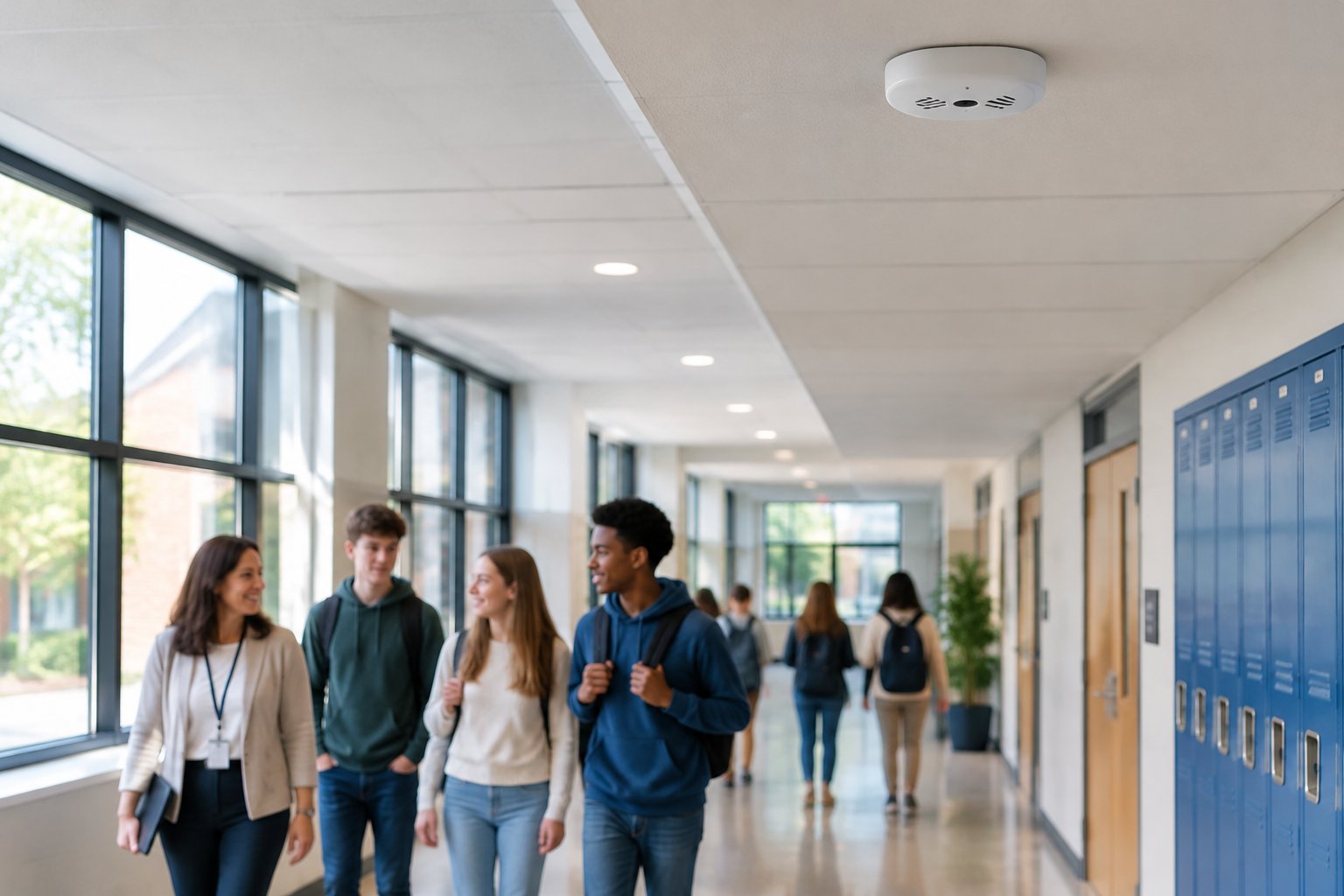
Vape detectors for schools are small ceiling sensors that sample the air for the aerosol and chemical signature an e-cigarette or THC pen leaves behind, then send an alert to staff within seconds. They have no camera and record no video, which is why districts can mount them in restrooms and locker rooms, the rooms where most campus vaping happens.
The idea is simple, but a program that actually changes behavior takes more planning than buying a box and screwing it to the ceiling. This guide explains how the sensors read the air, why so many Texas campuses are adding them, how alerts should reach the right adult, and how to place devices so they catch vaping instead of shower steam.
How Vape Detectors Sense Vaping Without Cameras
A vape detector is an air quality monitor tuned for one job. It pulls in room air, measures what is in it, and compares the result to a baseline it builds for that specific room over a normal school day.
Particle sensing
An exhaled vape cloud is a dense burst of very fine particles. A laser particle counter inside the unit measures how many particles pass through and how large they are. A sharp jump that matches the size profile of vape aerosol is the first sign something happened.
Particle counts alone are easy to fool. Dust, aerosol deodorant and a running hot tap all add particles to a restroom, so a sensor that only counts particles will send a lot of false alerts.
Chemical and environmental readings
Better units confirm the particle spike with gas sensors that track volatile organic compounds, the vapors released when e-liquid heats up. Many also log humidity, temperature and, on some models, carbon dioxide. When several readings move together in a pattern that fits vaping, the device reports an event.
Some sensors try to separate a nicotine event from a suspected THC event, and many flag "masking" when a student sprays body spray to cover a cloud. Treat those labels as strong indicators, not lab results. No ceiling sensor identifies a product, a dose or a person.
Why it is a separate device from a smoke detector
A vape sensor looks a lot like a smoke detector, and the two get confused. A code-required smoke detector is part of your fire alarm, listed under NFPA 72 and wired to the fire alarm control panel so it can start an evacuation. Vape aerosol is not supposed to trip it, and you would not want every hit to empty the building.
A vape detector is a monitoring device with no fire protection role. Never remove, cover or move a required smoke detector to make room for one. Your fire alarm systems for schools keep their own inspection schedule, and the fire marshal (your Authority Having Jurisdiction) has the final say on them.
Why Texas Schools Are Adding Vape Detection
Texas has spent the last few years tightening and adjusting how schools respond to student vaping. House Bill 114, which took effect in September 2023, made e-cigarette possession or use on or near school property a mandatory placement in a Disciplinary Alternative Education Program (DAEP). In 2025, House Bill 6 removed the mandatory DAEP requirement and gave districts more discretion over the consequence.
Either way, campuses are expected to respond when vaping happens, and they cannot respond to what they cannot see. Cameras cover hallways, entrances and the cafeteria. Students know the restroom is the one place no adult can watch, and that is where the problem moved.
A sensor fills that gap without putting a lens where it does not belong. It also gives administrators something they rarely had before: a dated record of when and where incidents occur, which makes it easier to staff hall duty where it matters and apply discipline policy consistently.
Where to Place Vape Detectors on Campus
Start with student restrooms, then locker rooms, then secondary spots such as back stairwells and little-used corridors. Your discipline records usually point to a handful of restrooms near certain wings or lunch periods, and those rooms should be first in a phased rollout.
Restrooms and locker rooms
A single-user restroom often needs one sensor. A large multi-stall room, or one with an L-shaped layout, may need two, because vapor exhaled in a far stall can reach the exhaust fan before it reaches a sensor across the room. Locker rooms are big, open and humid, so they take more careful coverage planning than a standard restroom.
Airflow and Houston humidity
Mount the sensor on the ceiling where vapor collects, usually over or near the stalls, and keep it away from supply diffusers and exhaust grilles. A unit beside a supply vent gets a constant stream of fresh air that pushes the cloud past it.
Humidity is the biggest source of nuisance alerts in Houston-area schools. Restrooms next to gyms, locker rooms with showers and older buildings with weak ventilation all run humid for much of the year. Moving a sensor a few feet away from sinks and showers often cuts false alerts without losing detection.
Check the details before anyone drills:
- Is there a network drop or a network closet within cable distance of each restroom?
- Will your IT team want sensors on their own network segment?
- If you choose battery or Wi-Fi units, who changes batteries and does the signal reach through tile and metal partitions?
- What happens to alerts during a power outage in hurricane season?
How Alerts Reach Staff and Tie Into Campus Security
An alert only helps if it reaches an adult who can walk to that restroom in the next minute or two. Most systems send a text, an email or an app notification that names the room, the event type and the time.
Keep the recipient list short
Two or three assistant principals or campus security staff per wing works better than twenty names on a distribution list, because a big list lets everyone assume someone else is going. Set an escalation rule so an unanswered alert moves to the next person after a few minutes. Tamper alerts, sent when a student covers, unplugs or knocks down a sensor, should also go to whoever handles facility damage.
Pair alerts with hallway cameras
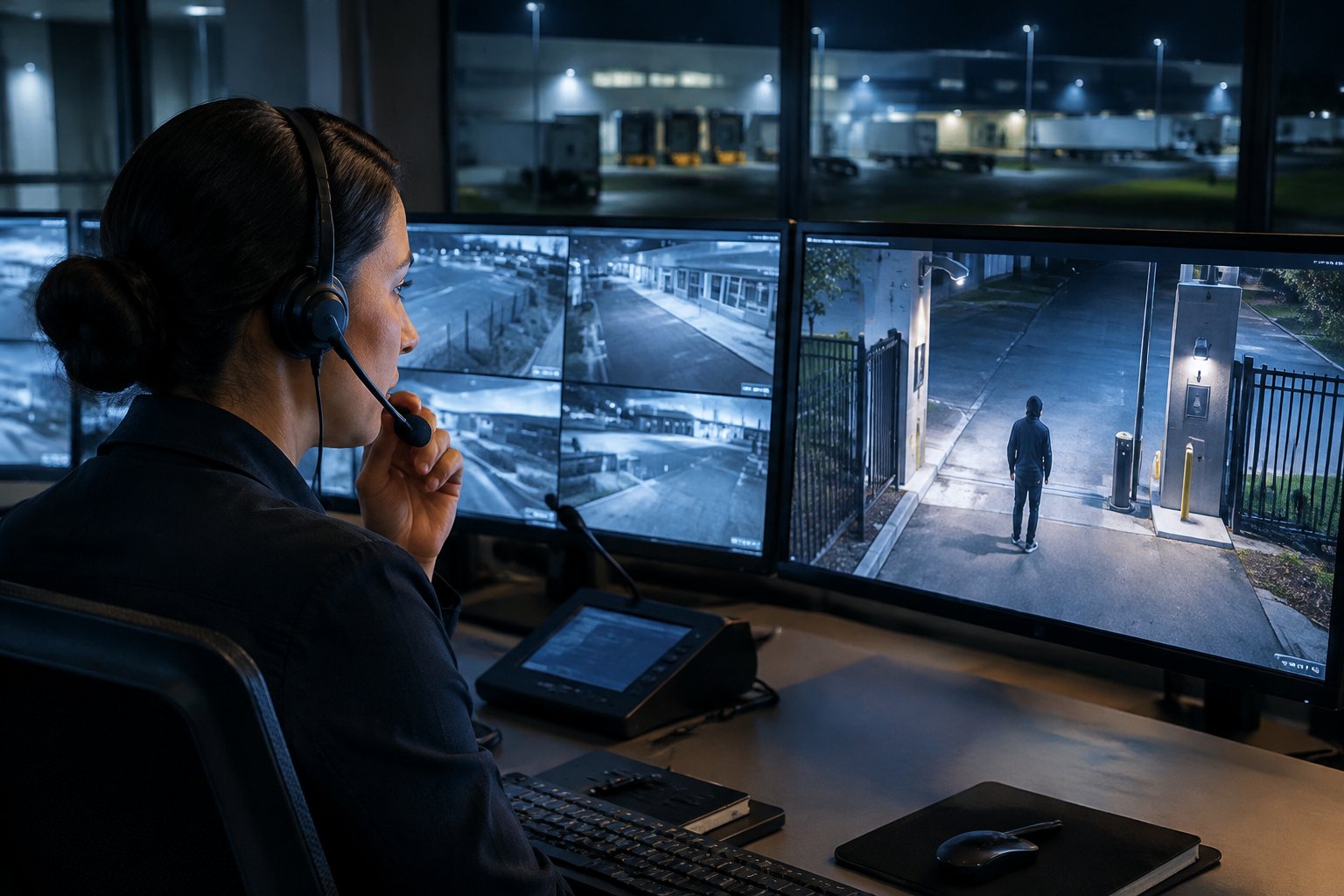
The sensor tells you where and when. A camera in the corridor outside the restroom tells you who walked in and out around that time. Aim those cameras at the hallway and the entrance, never through the doorway, so the private space stays private.
Many platforms can attach the matching camera clip to each alert so staff review the right two minutes of footage instead of scrubbing through an hour. Alarm Masters designs and installs school video surveillance systems that can be laid out with restroom sensors in mind, so every alert has a corridor view to match.
Connect it with what you already run
Districts get the most from vape detection when it fits into the existing security stack rather than living in a separate app. That can mean alerts appearing on the same dashboard as cameras and door events, or a single login for the staff who respond. If your campus is reviewing its layers more broadly, our guide on how to intensify your school security system covers how cameras, access control and alarms work together.
Protecting Student Privacy
Privacy starts with the hardware. Confirm in writing what each unit collects and stores. Some models add sound-level analytics for shouting or aggression; ask whether those features only measure loudness in real time or whether any audio is ever saved, and switch off any feature your district cannot comfortably explain to parents.
Policy finishes the job. Update the student handbook to describe air quality monitoring in restrooms, send families a letter explaining what the sensors detect and what they never capture, and post signs at restroom entrances. Campuses that announce their program openly often see fewer incidents, because the deterrent starts working before the first alert.
Limit dashboard access to the staff who respond and the administrators who review trends, and set a retention period for event data. Review that policy with district counsel so it matches how your district handles other student records.
Building a Response Plan Before Go-Live
Write the plan before the sensors are switched on. Decide who walks to the restroom, what they say, how a search is handled under district policy, and how the event is documented. Train every responder on the same steps so a 9 a.m. alert and a 2 p.m. alert get the same handling.
Log each incident the same day. After a semester, the data shows which rooms, periods and days drive the most alerts, which lets you shift supervision instead of guessing. Many districts also route first offenses to a counselor or a cessation program, since nicotine dependence is hard for teenagers to break without help.
Give Your Campus a Clear View of Vaping
The goal is a restroom program that catches vaping, respects privacy and puts every alert in front of an adult who acts on it. As a partner of Eagle Eye Networks and Brivo, Alarm Masters can tie sensor alerts to cloud video and door events on one screen, and our team walks your campus to map restrooms, airflow and corridor cameras before any work starts. Learn more about our school security solutions. Call 281-933-3900 or request a free estimate to plan your rollout.
Frequently Asked Questions
Do vape detectors work in large high school restrooms?
Yes, as long as coverage matches the room. Big multi-stall restrooms often need two sensors, and placement relative to exhaust fans matters more than raw sensitivity. A site walk with the ventilation running shows where vapor actually travels.
Can students tell where the sensor is and avoid it?
They will see it, and that is part of the deterrent. Because the device samples the whole room's air rather than a single spot, standing in the far corner or blowing into a sleeve usually still raises readings. Tamper alerts cover the students who try to block the unit.
Do vape detectors need a network connection?
Most do. Wired models typically use Power over Ethernet, where one cable carries power and data, while wireless models rely on Wi-Fi or cellular and need batteries or a nearby outlet. Many campuses use wired units in main buildings and wireless units in portables.
Should staff restrooms get sensors too?
Some districts add them for consistency, which helps answer fairness questions from parents and staff. Whether you include them is a policy decision, so settle it before installation and describe it in your handbook.
How long before a new program shows results?
Most campuses review alert data after the first grading period to adjust placement, sensitivity and supervision. Expect a learning curve in the first weeks as students test the system and staff settle into the response routine.