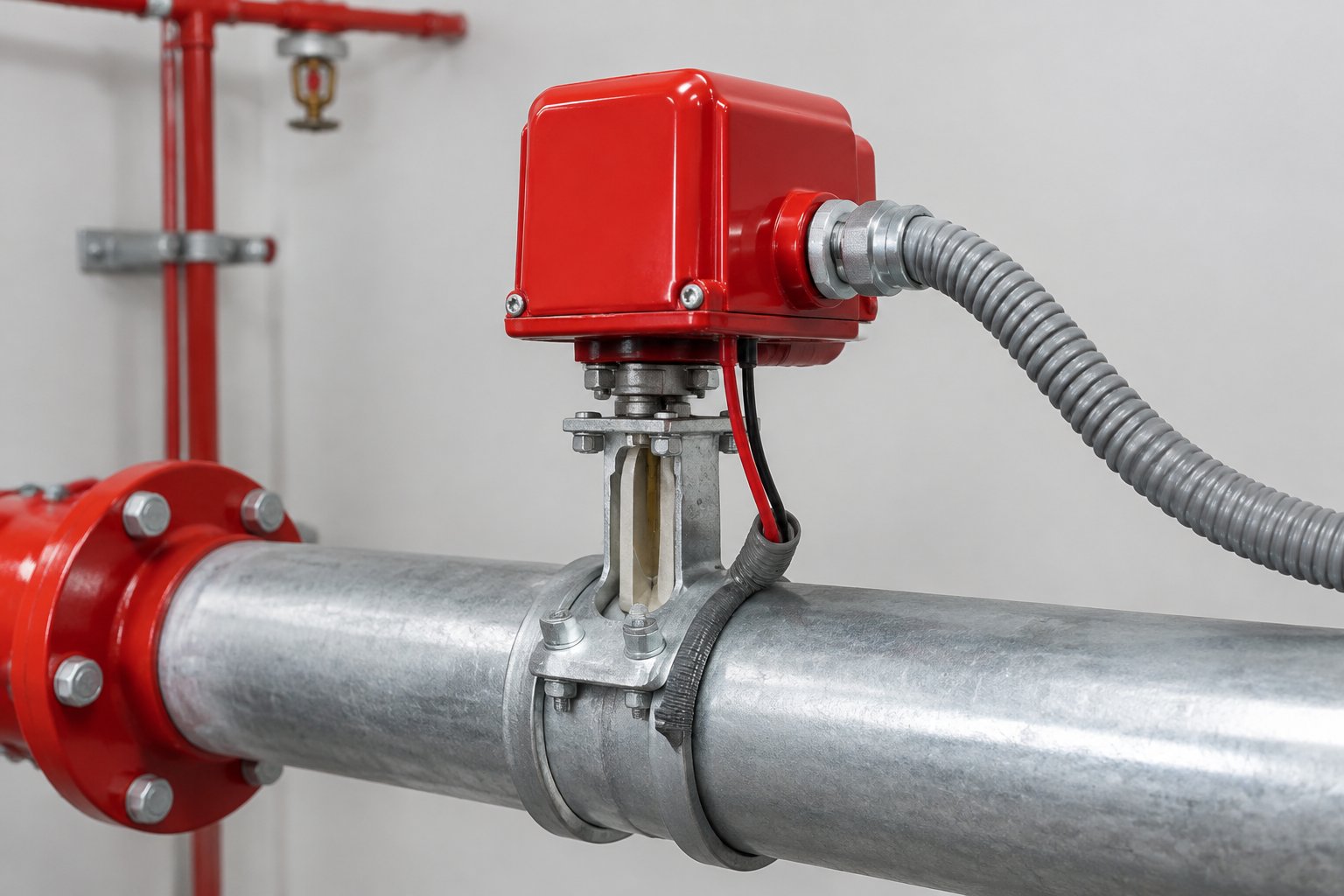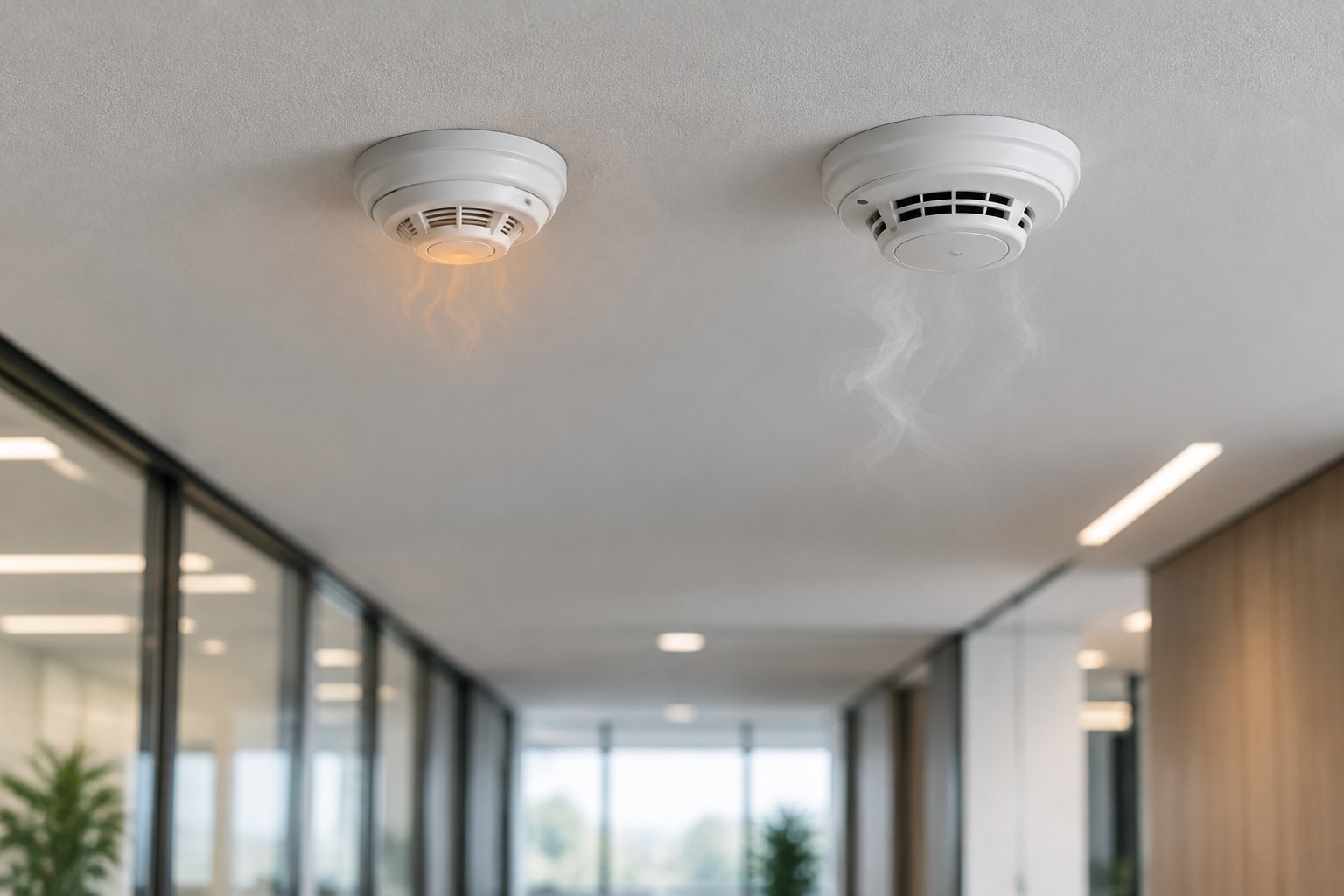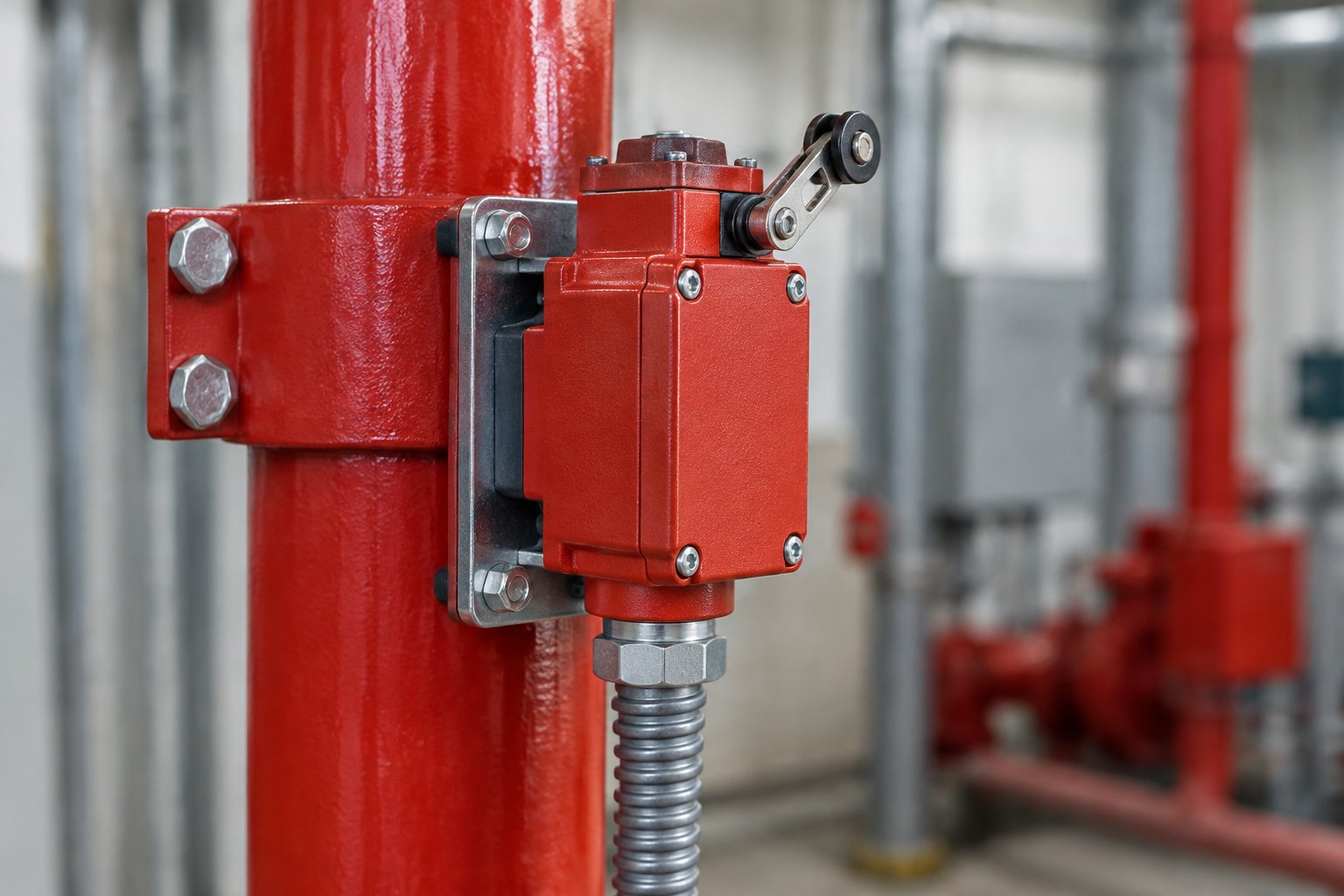
A tamper switch is a device mounted on a sprinkler control valve that reports to your fire alarm panel when the valve starts to close. That report shows up as a supervisory signal, not a fire alarm: no horns, no evacuation, no fire trucks. What it does tell you is that part of your sprinkler system may be cut off from its water supply, and somebody needs to go look.
For a building owner or property manager, that distinction matters. A supervisory signal is easy to dismiss because nothing is burning, yet a closed valve is one of the main reasons sprinklers fail when a fire does start. NFPA research on sprinkler performance has consistently found that a shut-off system is the leading reason sprinklers fail to operate. This guide covers how the switch works, what the signal means for you, the usual causes and a sensible response plan.
How a Sprinkler Valve Tamper Switch Works
Every sprinkler system has control valves that let contractors shut off water for repairs. Codes require those valves to be supervised so nobody can close one, by accident or on purpose, without the building finding out. On most commercial systems that supervision is electrical, and the tamper switch is how it happens.
Sensing valve position
The switch has an arm or plunger that rests against a moving part of the valve. On an OS&Y gate valve, the arm sits in a groove on the rising stem. On a butterfly valve, the switch is usually built into the gear operator. On a post indicator valve outside the building, the switch mounts on the post housing.
When the valve is fully open, the switch sits in its normal state. Once someone starts turning the handwheel, the arm moves and the switch changes state. NFPA 72 calls for the signal to come early, within two revolutions of the handwheel or when the stem has moved one-fifth of its travel from fully open, and it stays active until the valve is fully open again.
How the signal reaches the panel
The switch is wired to the fire alarm panel, usually through an addressable monitor module in the fire alarm system. That module gives the valve its own label, such as "Tamper, 2nd Floor Control Valve" or "Tamper, PIV North Lot." The panel lights its supervisory indicator, sounds a local buzzer and, on a monitored system, sends a supervisory signal to the central station.
Supervisory Signal vs. Fire Alarm: What It Means for the Owner
Fire alarm panels sort events into three types. A fire alarm means fire or water flow has been detected and people need to leave. A trouble means something is wrong with the alarm system itself, such as a broken wire or a low battery. A supervisory sits between the two: the alarm system is working, but a fire protection system it watches is not in its normal state.
A tamper signal is the most common supervisory you will see. Others include low air on a dry-pipe system or a fire pump condition. In practice, the central station will typically call your contact list rather than the fire department, and the building stays occupied.
Why it still deserves a same-day response
A supervisory from a valve means the sprinklers downstream may not get water. If that valve feeds a whole riser or the main supply from the street, a large share of your building could be unprotected. Your fire marshal, your insurer and often your lease all expect the condition to be found and corrected quickly. Many insurance policies also expect notice when sprinkler protection is impaired.
When a closed valve becomes an impairment
If a valve has to stay closed for repairs, the sprinkler system is impaired. NFPA 25 lays out an impairment process: notify the fire department and your insurer, limit hazardous work in the affected area and, when protection is out long enough, set up a fire watch. Your local Authority Having Jurisdiction (AHJ) decides the specifics. The tamper signal is what alerts you that the impairment clock has started.
Common Causes of a Tamper Switch Signal
Most tamper signals have an ordinary explanation. The goal is to find it quickly and confirm the valve is fully open.
- Sprinkler maintenance. A contractor closes a valve to replace a head or drain a section and does not open it all the way afterward. This is the most common cause by far.
- Other trades. Plumbers, roofers, tenant build-out crews and cleaning staff bump, hang things on, or partly turn valves in riser rooms and stairwells.
- Outdoor valve damage. Post indicator valves near parking lots and loading docks take hits from vehicles and landscaping equipment.
- Weather and corrosion. Houston heat, humidity and wind-driven rain during storms work their way into outdoor switch housings and corrode contacts.
- A worn or misadjusted switch. The switch drifts out of adjustment, a spring weakens, or paint fills the groove on an OS&Y stem, so the switch reports a closed valve that is actually open (or misses one that is closed).
Deliberate tampering is rare, but it is exactly why codes require supervision.
When it shows as a trouble instead
If the panel shows a trouble for the tamper circuit rather than a supervisory, the wiring is the issue: a cut cable, a loose terminal, or a ground fault after someone worked above the ceiling. A trouble means the panel can no longer see that valve at all, so it deserves the same urgency.
What to Do When the Panel Shows a Tamper Supervisory
A simple routine keeps a supervisory from turning into an unnoticed impairment:
- Read the panel. Write down the exact message, the device label and the time.
- Call your monitoring center so they know someone on site is responding.
- Ask whether any contractor is working on the sprinkler system or near the riser today.
- Walk to the valve named on the panel and check its position indicator: a raised stem on an OS&Y, "OPEN" in the post indicator window, or the pointer on a butterfly valve.
- If the valve is partly closed and work is finished, have the responsible contractor reopen it fully and confirm the signal clears.
If the valve looks closed and you do not know why, do not crank it open yourself. Someone may have closed it to stop a leak or isolate a broken pipe, and reopening it could flood a floor. Find out who closed it first.
You can usually silence the supervisory buzzer at the panel, but the condition stays on the display until the valve is fully open. Never bypass or disable the point to make the message go away, since that removes the protection the switch exists to provide.
When to call a fire alarm technician
Call a licensed technician if the valve is clearly open and the supervisory will not clear, if the signal keeps coming back, or if the panel shows a trouble on the tamper circuit. Those patterns point to the switch, its adjustment or its wiring. Alarm Masters' licensed technicians can test, adjust and replace tamper switches during a fire alarm inspection or service visit, and confirm the signal restores at both the panel and the central station.
How Tamper Switches Are Inspected and Tested
NFPA 25 typically calls for valve supervisory switches to be tested twice a year, with the valves themselves inspected on a regular schedule. Your AHJ or insurer may set additional expectations.
During the test, the technician places the account on test with the monitoring center, then turns each valve toward closed. The supervisory should appear at the panel and the central station within the required movement. The technician then reopens the valve fully and confirms the restore signal. Each valve, its result and the restore time go on the inspection report.
The restore check is the step that matters most. A valve left a couple of turns short of open after testing can still look open at a glance while choking the flow. A good report shows every valve was tested and left fully open. If a supervisory appears at the panel but never reaches the central station, the issue is usually programming or communication, and our guide to fire alarm panel troubleshooting explains how panel events are traced.
Tamper switches and waterflow switches work as a pair
Tamper switches usually sit right next to the waterflow switch on each riser or floor control assembly. The waterflow switch reports moving water and triggers a fire alarm. The tamper switch reports valve position and triggers a supervisory. Both are tested at the same visit, and staff should learn the difference between the two panel messages.
Get a Stuck Supervisory Cleared Fast
A tamper signal that will not clear leaves you wondering whether your sprinklers will get water when they need it. Alarm Masters backs service calls with a 48-hour guaranteed turnaround, so our answer is "See you tomorrow." Our Texas-licensed fire alarm technicians will find whether the valve, the switch or the wiring is at fault and leave your system reporting normally. Call 281-933-3900, schedule service or request a free estimate.
Frequently Asked Questions
Is a tamper switch the same as a supervisory switch?
A tamper switch is one kind of supervisory switch. "Supervisory" covers any device watching the condition of a fire protection system, including low air pressure switches on dry systems and fire pump signals. The tamper switch is the one that watches valve position.
Can a tamper switch be installed on any valve?
Only on valves it is listed and designed to fit. OS&Y, post indicator and butterfly valves each use different switch styles, and some butterfly valves come with the switch built in. Using the wrong switch or mounting it loosely is a common reason for nuisance signals.
Do residential sprinkler systems have tamper switches?
Many smaller residential systems rely on a locked valve instead of electrical supervision, but apartment buildings and larger multifamily properties usually have supervised valves tied to the fire alarm panel. The adopted code and your AHJ decide what your property needs.
Can we chain and lock valves open instead of using tamper switches?
Sprinkler standards allow locked or sealed valves in limited situations, but in most commercial buildings with a required sprinkler system the International Fire Code calls for electrical supervision of control valves. Many owners use both: a lock or seal to discourage tampering and a switch to report any movement. Your AHJ decides what is acceptable for your building.