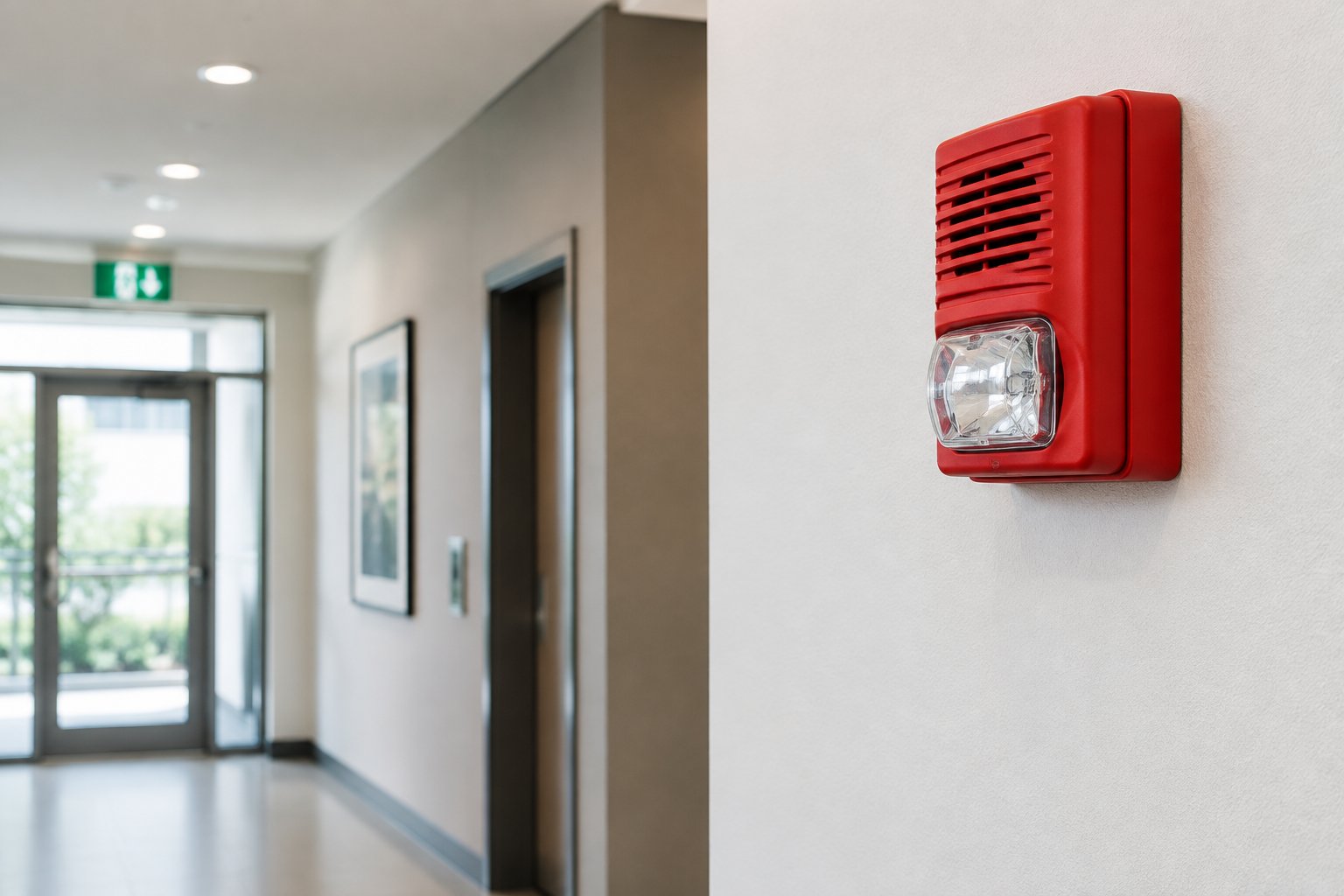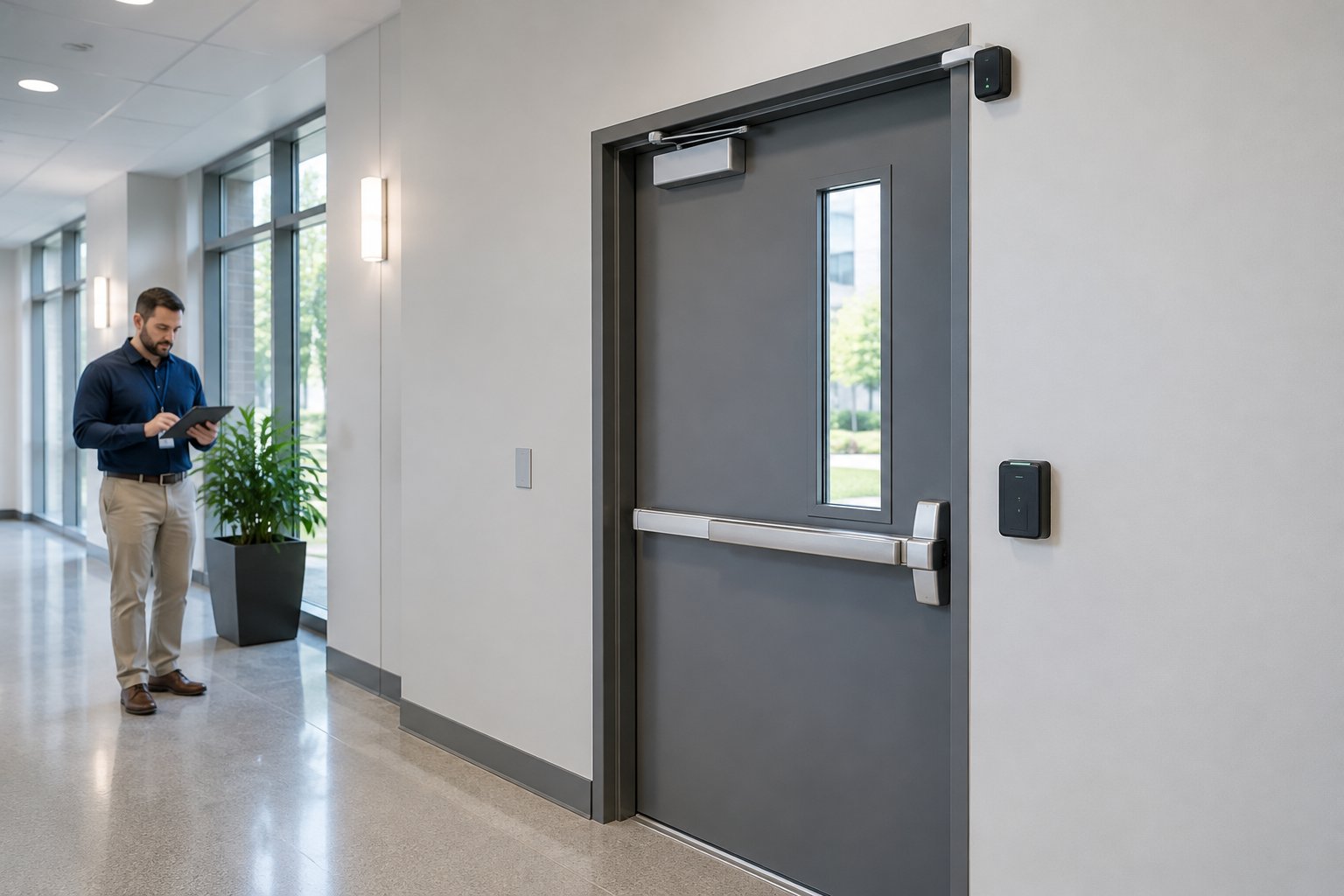
A request to exit sensor (often called a REX) is the device on the inside of an access-controlled door that tells the system a person is leaving. On a magnetic lock, it cuts power so the door opens. On a door with a lever or panic bar, it tells the panel the opening is a normal exit, so it does not log a forced door alarm.
That small job has two big consequences. Get it wrong on a mag lock and people can be trapped. Get it wrong on a monitored door and your staff gets flooded with false alarms until everyone stops paying attention. This guide covers the three main types, how each works with different locks, where to mount them and how to test them.
What a Request to Exit Sensor Actually Does
Every monitored door has a door position switch that reports open or closed. If the door opens without a valid card or code, the panel assumes it was forced. The REX signal is how the panel tells the difference between someone walking out and someone breaking in.
Shunting the forced-door alarm
When the REX trips, the panel logs an exit and ignores the door contact for a short period, called the shunt time. A few seconds is typical, adjusted to how fast the door closer works. Set it too short and slow-closing doors throw nuisance alarms. Set it too long and someone can walk out, prop the door and leave before the panel notices. Treat the shunt time as a security setting, not a convenience.
Releasing the lock, or not
Whether the REX also unlocks the door depends on the lock. That is where most mistakes happen, and it is covered in detail below. Clean REX signals also keep false alerts away from your burglar alarm and monitoring center, which is a big part of good access control and alarm system integration.
REX Motion Sensor vs. Exit Button vs. Integrated Hardware
There are three common ways to create a request to exit signal. Each has a place, and many doors use two of them together.
Motion sensors
A REX motion sensor mounts above the door or on the ceiling just inside it and detects a person approaching. It works hands-free, so it suits lobbies, hallways in clinics where staff push carts, and any door with steady foot traffic.
Most use passive infrared (PIR), which senses body heat moving through a zone. Others use an active infrared pattern or microwave, which can be focused tightly near the door hardware. The weakness of any motion sensor is that it reacts to what it sees, including someone walking past the door along a corridor. Always use a sensor built for exit duty with an adjustable pattern, never a general room motion detector.
Push-to-exit buttons
A push-to-exit button needs a deliberate press. It fits storage rooms, server rooms and staff-only doors where unplanned releases would be a problem. On many mag lock doors, a manual button is also required as a backup to the motion sensor, typically mounted 40 to 48 inches above the floor within about 5 feet of the door and labeled "PUSH TO EXIT."
Switches built into door hardware
Many panic bars, exit devices and lever sets come with a request to exit switch inside. It fires only when someone pushes the bar or turns the lever, so passing foot traffic cannot trip it. For logging exits on doors with mechanical exit hardware, this is the most accurate option available.
Working With Mag Locks and Electric Strikes
The lock type decides what the REX must do. Treating every door the same is the most common design mistake.
Magnetic locks
A mag lock holds the door with an electromagnet, and nothing on the door itself can break that hold. The only way out is to remove power. On these doors the REX is a life safety device: it must cut lock power so the person can push the door open.
Because the door depends entirely on that release, building codes add backup paths. For sensor-released doors, the model codes generally call for the lock to unlock when the sensor detects someone, when power is lost and when the fire alarm activates. They also call for a manual unlocking device near the door that cuts power to the lock directly, independent of the access control electronics, and keeps it unlocked for a set time (30 seconds under the International Building Code). Some mag lock doors instead use listed panic hardware with a built-in switch that drops lock power, which follows a different code path. Your local Authority Having Jurisdiction (AHJ) decides which arrangement is acceptable, so get the design approved before ordering parts.
Electric strikes and mechanical exit hardware
On a door with an electric strike, a lever set or a panic bar, the person can always turn the lever or push the bar to get out. The REX does not need to unlock anything. Its job is to shunt the alarm and log the exit.
Wiring the REX to unlock a strike door anyway causes two problems. The strike cycles every time someone walks by inside, which wears it out faster, and a perimeter door can unlock briefly for no reason. For a refresher on how the two lock styles differ, see the main differences between magnetic strike locks and electric strike locks.
Fire alarm and power loss
On mag lock doors, fire alarm release should come from a relay that drops lock power directly, not through software. In the Houston area, storm outages put the power loss behavior to a real test, so know how each door is expected to act when the lights go out. If your doors and fire alarm are not tied together correctly, Alarm Masters' licensed technicians can review each opening and set up access control that keeps every exit compliant and ready for inspection.
Placement Tips That Prevent Problems
Most REX complaints trace back to placement. A few practical rules prevent nearly all of them.
Aim at people leaving, not people passing
Mount the sensor on the secure side, just above the door frame or on the ceiling a short distance in front of the door. Shape the pattern with the sensor's masks or adjustments so it covers the area where someone reaches for the handle, and not the hallway beyond. Doors that open onto busy corridors are the usual source of false releases, so they get the tightest pattern.
Release early enough
The lock must release before the person reaches the door. Walk toward it at a normal pace and confirm the lock drops a step or two before your hand meets the bar. If it releases late, people push on a locked mag lock and assume the door is broken. On double doors, check both leaves.
Keep heat and drafts out of the zone
PIR sensors react to changes in heat. Keep them clear of HVAC diffusers, space heaters and glass that takes direct afternoon sun, which is a real issue on west-facing Houston storefronts. Moving a sensor a foot away from a supply vent can stop random releases on its own.
Guard against tricks from outside
On doors with large gaps or glass, someone outside can try to trip the sensor by sliding an object under the door or waving something through a gap. Tighter patterns, door sweeps and sensors that ignore movement close to the floor all help. Adding a camera on the inside of key doors lets you see what tripped a sensor, one benefit of access control and surveillance integration.
Testing Every Door
REX settings drift. Sensors get bumped, timers get changed and new HVAC work moves vents. A short routine at each door catches most problems:
- Walk toward the door at a normal pace and confirm the lock releases early.
- Walk past along the hallway and confirm nothing releases.
- Press the manual button and confirm it drops lock power even with the access panel offline.
- Open the door without a REX or card and confirm the panel reports a forced door.
- Hold the door open past the shunt time and confirm a door-held alarm.
- With your fire alarm provider present, confirm fire alarm release on mag lock doors.
Record the results door by door. A sensor that keeps failing the same test usually needs to be moved, not adjusted again.
Exits That Open When They Should
A well-set REX lets people out without thinking about it and keeps your alarm log full of real events instead of noise. Alarm Masters holds both a Texas security license and a Texas fire alarm license, so door hardware and fire alarm release get planned by one team. Call 281-933-3900 or request a free estimate and we will review your exits.
Frequently Asked Questions
Does every access-controlled door need a REX?
Nearly every access-controlled door with a door position switch needs some way to signal an exit, or it will report forced door alarms. On mag lock doors, the REX is also what lets people out. The type can be a motion sensor, a button or a switch in the exit hardware.
Can a REX sensor be used on the outside of a door?
No. A request to exit device belongs on the secure side only. Anything on the outside that unlocks a door is an entry device, and it should be a card reader, keypad or other credential.
What does fail-safe vs. fail-secure mean with REX?
A fail-safe lock unlocks when it loses power, which is how mag locks work. A fail-secure lock stays locked from outside when power fails, which is common with electric strikes, while the inside lever still lets people exit. The REX setup should match the lock type.
Can a REX sensor open an automatic door?
A REX releases or logs the lock, but it does not swing the door. If you need the door to open by itself, an automatic operator has to be added and wired so the lock releases before the operator pushes.