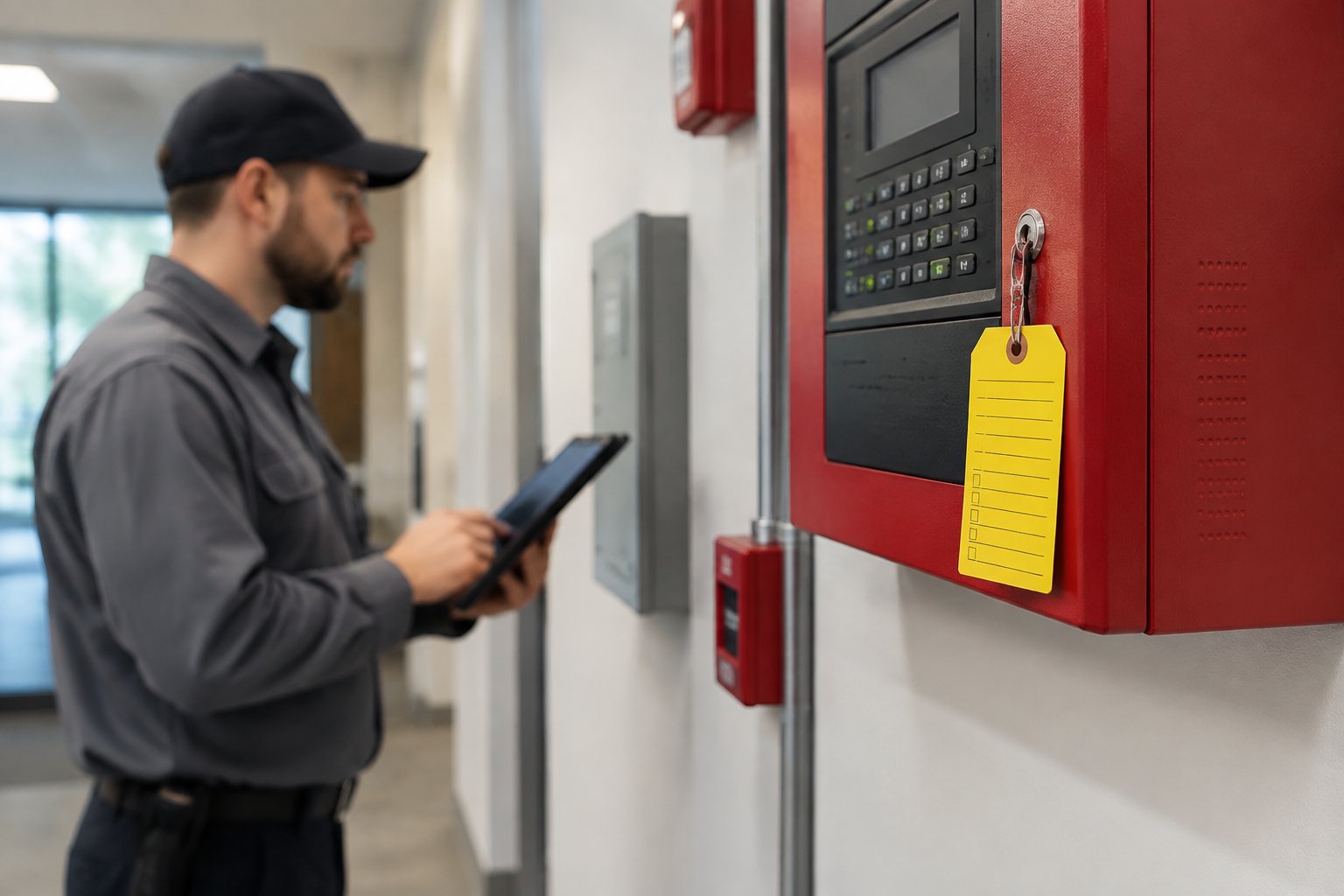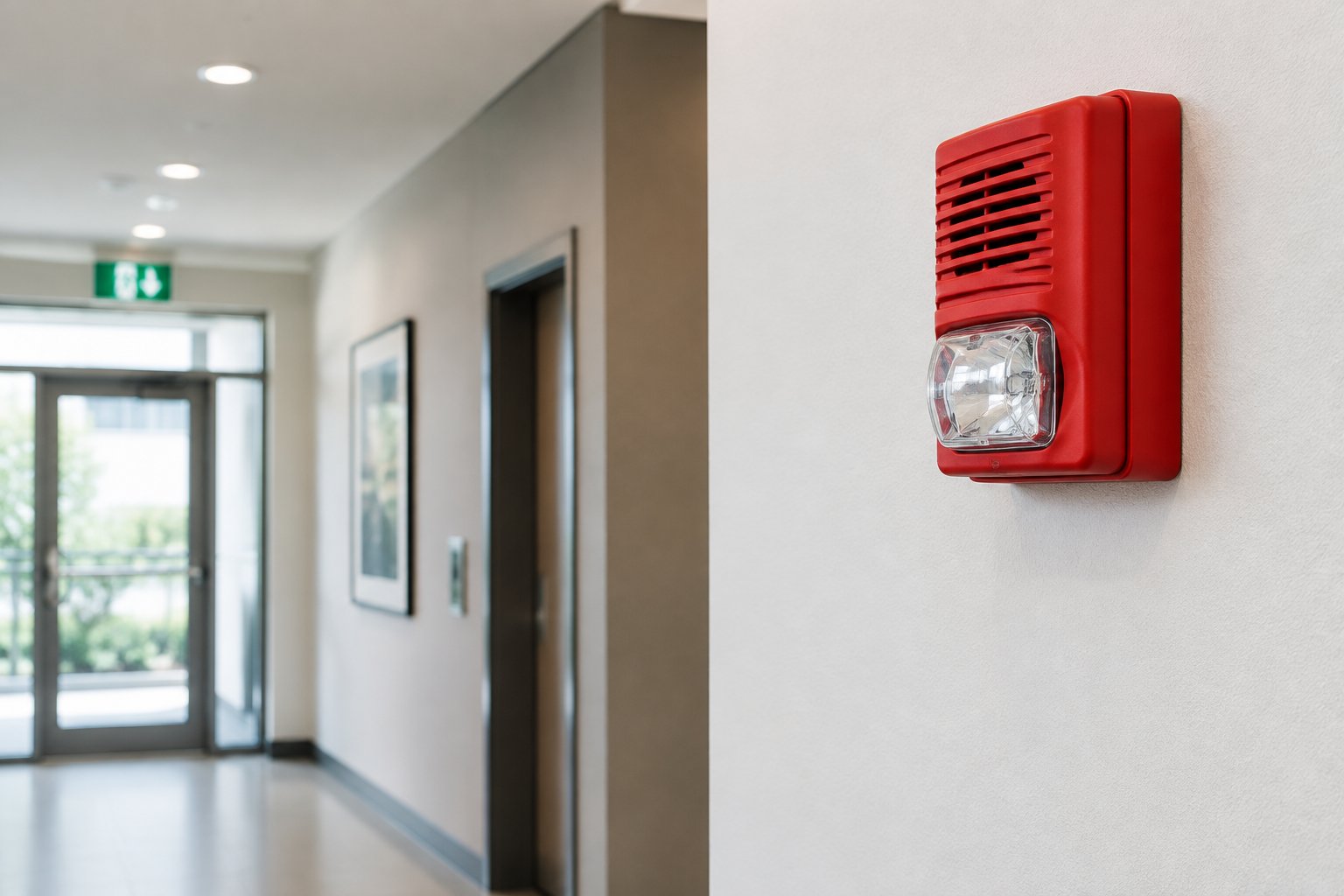
A horn strobe is a fire alarm notification device that sounds a loud horn and flashes a bright white strobe at the same time. The horn reaches everyone who can hear it, and the strobe reaches people who are deaf or hard of hearing or standing somewhere too loud to hear a horn. Together they tell every occupant the same thing: leave the building now.
Horn strobes are the devices most people picture when they think of a fire alarm, mounted on corridor walls, in restrooms and above conference room doors. They also cause a surprising share of inspection deficiencies, from the wrong candela setting to strobes that flash out of step. This guide explains how they work, how coverage is sized, where they mount, and when a speaker strobe is the better choice.
How a Horn Strobe Works
A horn strobe does not detect anything. Smoke detectors, heat detectors, pull stations and sprinkler flow switches find the fire and report it to the panel. The panel then powers the horn strobes through a notification appliance circuit (NAC), which usually runs at 24 volts DC.
The temporal three pattern
For fire evacuation, the horn sounds a temporal three pattern: three short blasts, a pause, then three more, repeated. NFPA 72 reserves that pattern for evacuation so people learn to recognize it anywhere. In public spaces, the horn has to sound at least 15 decibels above the average ambient sound level, which is why a horn that seems deafening in a calm office is the right level for a busy shop floor.
The strobe flash
The strobe flashes at a steady rate between one and two times per second. The light is intense enough to bounce off walls and floors, so a person facing away from the device still notices it. That reflected light is what makes visible notification work in restrooms, meeting rooms and open offices.
Where Building Codes Call for Audible and Visible Alarms
Your building and fire codes decide whether a fire alarm with notification is required. NFPA 72 then sets how horns and strobes are designed and installed, and the ADA Standards require visible alarms in public and common use areas. The local Authority Having Jurisdiction (AHJ) approves the plans and witnesses the final test.
In practice, that means strobes in corridors, lobbies, restrooms, break rooms, conference rooms, classrooms and other shared spaces. Restrooms catch owners off guard more than any other room. A hallway horn can be heard through the door, but a deaf employee in a restroom cannot see a strobe in the hallway, so the restroom needs its own.
Remodels are the other common gap. A tenant adds a wall to split one office into two, and suddenly one of those rooms has no visible signal. If you are planning a buildout or a change of use, have the notification layout checked before the walls go up. Alarm Masters' licensed team can review your drawings and adjust the layout as part of our commercial fire alarm design and installation work.
Candela Ratings: Sizing Strobe Coverage
Candela (cd) measures how bright a strobe flashes. Brighter strobes cover larger rooms, and NFPA 72 publishes tables that match room size to the minimum candela for one wall-mounted strobe.
A few examples from the wall-mounted table show how quickly the numbers climb:
- 20 by 20 foot room: 15 cd
- 30 by 30 foot room: 34 cd
- 40 by 40 foot room: 60 cd
- 50 by 50 foot room: 94 cd
Those values assume the strobe sits near the middle of a wall. If you move it toward a corner, the designer has to size it for a larger room, measured to the farthest corner. Large rooms often get several lower-candela strobes on different walls instead of one very bright unit, which gives more even coverage.
Corridors and sleeping rooms
Corridors up to 20 feet wide follow a simpler rule: 15 cd strobes within 15 feet of each end and no more than 100 feet apart. Sleeping rooms in hotels, dorms and assisted living are different, because the strobe has to wake someone. Those rooms typically need 110 cd, or 177 cd when the device mounts within 24 inches of the ceiling.
Selectable candela settings
Many horn strobes let the technician pick the candela with a switch, often 15, 30, 75 or 110 cd. That flexibility helps with spare parts, but it creates a common inspection problem. Someone swaps a device, leaves the switch at the factory setting, and the room ends up underlit. The approved drawings should list the setting for every strobe, and the installed devices should match.
Wall vs Ceiling Horn Strobes
Wall-mounted strobes are installed so the entire lens sits between 80 and 96 inches above the floor. That keeps the light above furniture and people's heads but low enough to read across the room.
Ceiling-mounted strobes spread light downward in a wider cone. They suit open offices with cubicles, retail floors with tall fixtures and rooms where walls are mostly glass. Ceiling units have their own coverage tables based on ceiling height, and many are listed for ceilings up to 30 feet.
Wall and ceiling models are listed separately. A ceiling unit screwed to a wall, or the reverse, falls outside its listing and will usually fail inspection, even though it flashes and sounds normally.
Synchronization and Circuit Power
Wherever someone can see more than two strobes from one spot, the flashes have to be synchronized. Strobes flashing out of step create a combined flash rate that can trigger seizures in people with photosensitive epilepsy. Sync comes from the panel, a NAC power extender or a sync module, using a protocol specific to the manufacturer.
That is why a replacement device has to match the sync protocol already on the circuit. A strobe from a different product family may work on its own and still flash out of step with its neighbors.
Power is the other check. Every strobe draws current when it flashes, and higher candela settings draw more. The designer adds up the load on each circuit and sizes the standby batteries to run the system through an outage, then sound and flash for the required alarm period. After hurricane season outages around Houston, many owners find out the hard way that a panel's batteries were near the end of their life, so treat fire alarm control panel battery backup as part of your notification plan.
Weatherproof Horn Strobes for Outdoor and Wet Areas
Covered loading docks, parking garages, exterior exit paths, pool areas and wash bays need horn strobes listed for outdoor or wet locations. Weatherproof models use gasketed housings and matching weatherproof back boxes.
Houston humidity and wind-driven rain get into standard indoor devices through unsealed conduit and back boxes. The result is corrosion, a weak or garbled horn and intermittent trouble signals that are hard to chase down. Point conduit entries down where possible and seal them, and plan on weatherproof units even for areas that are only partly covered.
Horn Strobes vs Speaker Strobes for Voice Evacuation
A horn strobe sounds a tone. A speaker strobe pairs the strobe with a speaker that plays recorded or live voice messages, telling people what is happening and where to go. Voice systems can send different messages to different floors, which makes phased evacuation or relocation possible.
Codes commonly require voice evacuation in high-rise buildings, large assembly occupancies such as churches and event venues, and many healthcare and educational buildings. Speaker strobes run on amplified audio circuits, so you cannot swap a horn strobe for a speaker strobe without changing the panel and wiring. Our guide to a fire alarm system with voice evacuation explains how those systems are laid out.
If your building is growing, adding occupants or changing use, ask whether voice notification makes sense before replacing a large number of horns. Doing it once costs less than doing it twice.
Get Notification Right for Every Occupant
A horn strobe layout works when every occupant can hear it, see it and trust it. Alarm Masters has designed and installed fire alarm systems for Greater Houston buildings since 1990, and our White Glove approach covers everything from the candela schedule to the final walk with the fire marshal. Call 281-933-3900 or request a free estimate and we will help you get notification right the first time.
Frequently Asked Questions
Can I replace a horn strobe with a strobe only device?
Sometimes. In areas where the horns from nearby devices already meet the required sound level, a designer may specify strobe-only units, which is common in restrooms and small offices. Any change should match the approved drawings, because removing a horn can drop sound levels below code in that room.
Why do some horn strobes look red and others white?
The housing color is mostly a design choice, and many buildings use white devices in finished spaces to blend with the walls. The device markings matter more: units used for fire alarm are typically labeled "FIRE," while those labeled "ALERT" or with amber lenses are meant for mass notification or other signals.
Can the horn be silenced while the strobes keep flashing?
Yes, on most systems. Once the fire department or authorized staff silence the alarm, horns stop and strobes typically continue flashing until the panel is reset. That keeps a visible warning in place while responders work.
How long do horn strobes last?
There is no fixed replacement date, and many devices last well over a decade indoors. Outdoor units, devices in humid areas and older xenon strobes tend to fail sooner. Annual testing will catch weak horns, dim or dead strobes and sync problems before they become deficiencies.
Do horn strobes need to be tested every year?
Yes. NFPA 72 calls for annual testing of notification appliances, where a technician confirms each horn sounds, each strobe flashes and visible devices stay in sync. Keep the test report on site, since inspectors and insurers often ask for it.