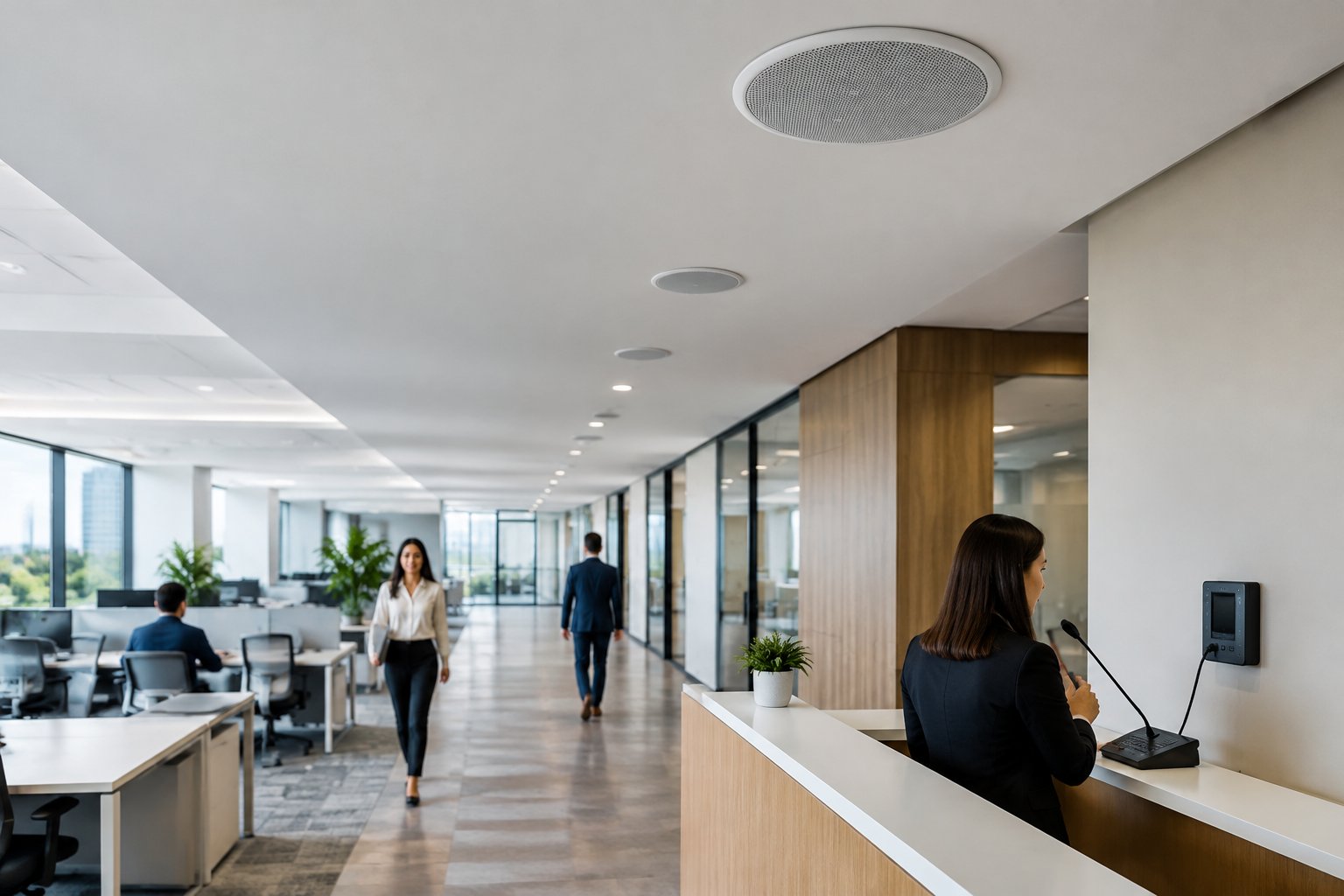
An overhead paging system is a network of microphones, amplifiers and ceiling or wall speakers that lets one person make a live announcement heard across a building or campus. Businesses use it to call a driver to dock 6, mark a shift change, ring class bells or play background music between announcements.
For most Houston-area facilities, the right answer is a zoned system tied into the phones, so staff can page any area from a desk phone without walking the floor. Getting there means making a handful of decisions: IP or analog equipment, how to split the building into zones, what to integrate and where daily paging ends and code-required fire alarm voice begins.
How Overhead Paging Works
Every page travels the same path. Your voice enters a microphone or phone handset, an amplifier boosts the signal and speakers in the selected area turn it back into sound.
The source can be a desk microphone, a handheld mic or, most often today, the phone system. Staff dial a short code, pick a zone and speak. In traditional systems a central 70-volt amplifier drives passive speakers throughout the building. In IP systems each speaker has its own small amplifier and gets power from the network cable.
Paging is one-way: everyone in the zone hears the announcement, and nobody talks back through the speakers. If you need two people to hold a conversation, such as a visitor at a door and a receptionist, that calls for a commercial intercom system built for two-way calls, which is a separate design question.
Where Businesses Use Overhead Paging
The same basic technology serves very different buildings, and the use case shapes the speaker choice.
Warehouses and distribution centers
Large floors, high racking and constant forklift traffic make paging essential. Supervisors call drivers to doors, announce breaks and locate staff without leaving the office. Horn or pendant speakers hung from beam clamps project over the noise, and many sites add visual signals for workers wearing hearing protection.
Manufacturing plants
Machine noise is the enemy here. Plants need higher-output speakers, more of them and careful placement so announcements cut through without blasting workers standing nearby. Shift-change tones are often scheduled automatically.
Schools
Schools rely on paging for morning announcements, bell schedules and calls to the front office. Classroom ceiling speakers, separate zones for the gym, cafeteria and playground, and an all-call group for campus-wide messages are typical.
Retail stores
Retailers use paging for customer service calls, register backup and background music. The music should duck automatically when a page starts and return when it ends, and volumes need to stay comfortable on the sales floor.
Churches
Churches page nurseries, children's classrooms and fellowship halls during services, often at low volume, and frequently share the system with background audio in foyers and halls.
IP vs Analog Paging
Choose IP if you are building new or already run a strong data network. Keep analog, or go hybrid, if your building has good speaker wiring you would rather not replace.
Analog systems
Analog paging runs on dedicated speaker cable back to a central amplifier rack. Many older Houston buildings already have that cable in the ceiling, and if it is in good shape, reusing it keeps the upfront cost down. Analog speakers are inexpensive and last a long time.
The trade-off is flexibility. Adding a zone means running new wire to the rack, and you cannot see from a computer whether a speaker has failed.
IP systems
IP speakers plug into network switches with standard Ethernet cable and typically draw power through that same cable using Power over Ethernet (PoE). Every speaker is visible from a web portal, so your team can change zones, schedule tones and see which devices are offline without climbing a ladder.
IP paging connects directly with VoIP and cloud phone systems, and most devices use the open SIP standard, so any phone can page. Multicast lets one audio stream reach every speaker in a group at the same moment, which saves network bandwidth and keeps speakers in sync so you do not hear an echo between them.
Hybrid systems
A paging adapter can connect an existing analog amplifier and its zones to a new IP phone system. You keep working speakers in older areas, add IP speakers in new wings and replace analog pieces as they wear out. For many businesses this is the most practical upgrade path because it avoids a single large rip-and-replace project.
Zoning and Integration
Zoning is where a paging system becomes useful instead of annoying.
Zones and paging groups
Zones let you send a message to one area without interrupting everyone else: the shipping floor, the front office or the kitchen. Paging groups combine zones for common needs, such as all classrooms, all outdoor areas or the whole building. Each zone can also have its own volume, so an announcement is loud in the gym and softer in the library.
Distinct tones help too. One chime for routine pages and a different tone for urgent messages tells people at once how to react.
Phone and bell schedule integration
Phone integration is what makes paging practical day to day. With a cloud or VoIP phone system, staff dial a code and speak. Older phone systems connect through a paging interface.
Schools and plants benefit from built-in scheduling. IP systems sync to network time, so class bells and shift tones stay accurate through daylight saving changes without anyone resetting a clock. The same scheduler can play recorded messages at set times, such as a closing announcement in a retail store.
Before you settle on equipment, have someone walk each space during working hours to measure noise and note ceiling heights. Professional commercial PA and paging design from Alarm Masters maps each speaker and zone to your layout before installation, so you do not discover dead spots after the ceiling tiles go back in.
Overhead Paging vs Fire Voice Evacuation
This is the line that catches many owners off guard. A paging system you use every day is not a fire alarm voice evacuation system, even if its speakers sit in the same ceiling.
What a fire voice system must do
Some occupancies, such as many large assembly spaces and high-rise buildings, are required by the building and fire codes to have an emergency voice/alarm communication system. That system falls under NFPA 72 and the International Fire Code. It uses listed fire alarm equipment, supervises its speaker circuits so a cut wire shows up as a trouble signal, plays a specific alert tone and prerecorded evacuation message automatically when a detector or sprinkler flow switch activates, has standby battery power and must deliver intelligible speech throughout the protected area.
A standard business paging amplifier does none of that on its own. Learn more about how a fire alarm voice evacuation system is designed and what it requires.
How the two systems work together
The two can coexist. Many buildings run a separate paging system and connect it to the fire alarm so paging and music mute automatically when the fire alarm activates, giving the fire system clear priority. Some facilities go the other way and use listed fire alarm speakers for routine paging as well, but that design has to be built around the fire system and approved, not added on later.
Visual signals follow the same split. Strobes on a paging system help in loud areas, but they do not replace the code-required fire alarm strobes that alert people with hearing loss.
Before connecting paging to fire or emergency functions, talk with your fire alarm designer and your local fire marshal. The Authority Having Jurisdiction (AHJ) has the final say.
Installation and Upkeep
Coverage drives cost. A warehouse with 30-foot ceilings needs fewer but more powerful horn speakers, while an office needs more ceiling speakers at lower volume. More speakers at moderate volume almost always sound clearer than a few speakers turned all the way up.
Outdoor speakers for loading docks, parking lots and playgrounds need weather-rated housings that can handle Houston heat, humidity and heavy rain. Put the amplifier rack and PoE switches on battery backup so short outages during storm season do not silence the building, and bring your IT team in early on IP projects to plan network segments and multicast settings.
After installation, test a page in every zone, including corners and stairwells, then train staff on codes, zones and tones. Recheck coverage whenever you reconfigure racking or move walls.
Get Paging That Reaches Every Corner of Your Facility
The aim is a system that fits how your staff work, uses the wiring you already have where it makes sense and stays clearly separate from your fire alarm duties. Alarm Masters designs PA, paging and fire alarm systems under one roof, holds Texas State Fire Alarm License #ACR-1975 for the fire side of the conversation, and has served Houston businesses since 1990. Call 281-933-3900 or request a free estimate to plan zones and coverage for your building.
Frequently Asked Questions
Can I page from my cell phone?
Many IP paging platforms and cloud phone systems allow paging from a mobile app or softphone, which helps supervisors who are away from a desk. Check that your phone provider supports it and set permissions so only the right people can page.
How many speakers does a building need?
It depends on ceiling height, room size, noise level and how clear the speech needs to be. Open offices need closer spacing than warehouses, and noisy areas need higher-output speakers. A site walk with noise readings gives a reliable count.
Can paging run alongside background music without bothering employees?
Yes. Set music only in the zones that want it, keep levels moderate and let pages override automatically. Many retailers and offices schedule music to start at opening and stop at closing.
Is overhead paging useful for lockdowns or severe weather?
It can carry those announcements, and many schools and businesses use it that way. For broader alerts that also reach phones, screens and email, look at a mass notification approach, and plan any emergency use with your safety team.
How long does analog paging equipment last?
Well-maintained analog amplifiers and speakers often stay in service for many years. The usual reasons to replace them are failed amplifiers, a move to IP phones or a building expansion that the old wiring cannot support.