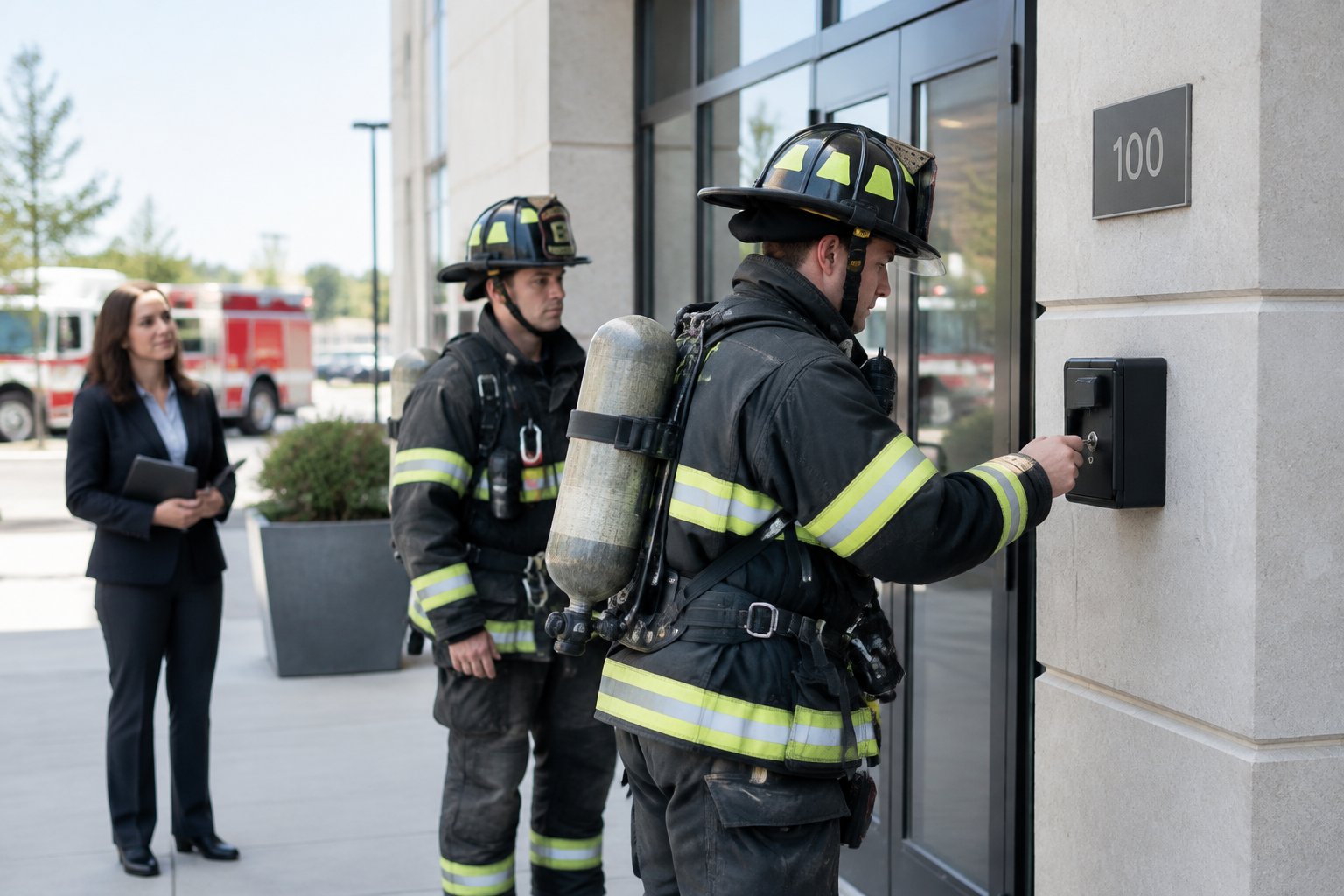
A Knox Box is a small, high-security steel safe mounted on the outside of a building that holds the keys and access cards firefighters need to get in during an emergency. Only the local fire department carries the master key that opens it. When an alarm comes in at 2 a.m., crews unlock the box, take your keys and walk in, without breaking a door or waiting for a keyholder to drive across town.
For building owners and property managers, that box decides how fast help reaches the people and equipment inside. Many fire departments require one on commercial buildings, especially those with monitored fire alarm or sprinkler systems, and the box has to be approved by the department before you order it. This guide covers how the system works, which properties usually need one in the Houston area, how to get approval, and how emergency access fits with your fire alarm and door controls.
How a Knox Box Works
Every box in a fire department's response area opens with that department's master key. You decide what goes inside, and the fire department controls who can open it. That split keeps the building secure while giving crews a fast, damage-free way in.
What goes inside the box
The box should hold whatever responders need to reach every part of the building. In most commercial properties that means exterior door keys, keys to the fire alarm and sprinkler riser rooms, elevator recall keys, and an access card or fob for card-reader doors. Some owners add gate remotes, utility room keys and a simple floor plan.
Label every key with a durable tag that names the door it opens. A crew working in smoke does not have time to try a dozen keys on one lock. If your doors run on cards, the responder card must open every door a firefighter could need after hours, including stairwells and mechanical rooms.
Who holds the master key
Your local fire department holds the master key, and the Knox Company controls how those keys are made and replaced. The key uses a patented design that cannot be copied at a hardware store, and many departments keep it in a secure encoder on the truck that logs every time it is released.
Your staff do not get a copy, and they cannot open the box. To change what is inside, you call the fire department and schedule a visit.
Why fast entry matters
Without a box, crews responding to an alarm at a locked building have two choices: wait or force entry. A broken storefront or a pried steel door often costs more than the box itself, and forcing a door is slow, physical work that delays the search for the fire. Fast entry also helps on nuisance alarms, because the crew can check the panel, confirm nothing is burning and leave the building locked behind them.
When Commercial Properties Need a Knox Box
Key box requirements come from your local fire code. The International Fire Code allows the fire code official to require a key box wherever access to a building or area is restricted, and most departments apply that to locked commercial buildings with monitored fire systems. Your Authority Having Jurisdiction (the fire marshal or code official for your address) makes the final call.
Buildings that commonly need one
Departments often require a box on any commercial building with a monitored fire alarm or sprinkler system. Many also call it out for schools, healthcare and assisted living facilities, churches and other assembly spaces, restaurants, and industrial sites storing hazardous materials. Gated multifamily communities and gated commercial lots may need a key switch or padlock on the gate as well.
Size thresholds and occupancy rules vary from city to city, so a rule from one jurisdiction does not carry over to the next. A renovation or change of use can also trigger a box requirement on a building that never needed one. If your project includes new fire protection work, review when a fire alarm system is required by code at the same time, since the two requirements usually travel together.
Who sets the rules in Houston and the surrounding area
Inside Houston city limits, the Houston Fire Department's Fire Marshal's Office enforces the fire code. Properties in unincorporated Harris County, which includes many Spring, Cypress and Katy addresses, fall under the Harris County Fire Marshal's Office. Cities such as Pearland, Sugar Land, Conroe and League City each have their own fire marshal.
Confirm which office covers your exact address before you plan anything. That office decides whether you need a box, which models it accepts and where it goes. A box keyed for a neighboring department will not open with your local master key.
Getting a Knox Box Approved and Installed
The order is always the same: approval first, purchase second, installation third. Skipping the first step is the most common mistake, because Knox only sells boxes tied to an approving fire department.
What to confirm with the fire marshal first
Ask your local fire marshal's office four things: whether a box is required, which Knox products it accepts, where it must be mounted, and whether it needs tamper monitoring. Ask about gates and your fire department connection (the exterior inlet crews use to feed water into your sprinklers) at the same time, since some departments want locking caps or a gate key switch included in the same approval.
Choosing the right size
The KnoxBox 3200 Series is the standard commercial model and holds up to 10 keys plus a few access cards. Larger properties may need a KnoxVault 4400, which holds up to 50 keys along with cards and emergency plans. Count every key and card responders will need, then leave room for future doors. A box crammed full makes the right key hard to find in the dark.
The 3200 comes in surface-mount and recessed versions. Recessed models sit flush with the wall and suit new construction, but they need to be planned before the walls are finished.
Placement and installation
The box goes where your fire department says, usually near the main entrance or the door closest to the fire alarm control panel. Knox's own instructions put local placement, height and orientation rules ahead of its general guidelines, so do not copy the mounting height from a building in another city.
An owner or general contractor can mount a standard box. If your department requires tamper monitoring, the switch needs to be wired, tested and adjusted by a qualified alarm installer. Alarm Masters' licensed technicians can tie the tamper switch into your existing panel, confirm it reports to the monitoring center and leave everything ready for the fire marshal's visit. You can book a fire alarm inspection or service visit to handle it alongside your annual testing.
The lock-up visit
The fire department locks the box, not you. Once it is mounted, call to schedule a visit and have your labeled keys and cards ready. The inspector checks the placement, opens the box with the master key, often tests the keys on their doors, then places them inside and locks it. Keep your own dated record of what went in.
How Emergency Access Works With Your Fire Alarm and Doors
The key box and the fire alarm system are separate. They connect only through a tamper switch and any door or gate releases your alarm is designed to control.
Does the fire alarm open the box?
No. The box stays locked until a firefighter uses the master key. Your fire alarm can do other access work, such as releasing magnetic locks on exit doors, releasing delayed egress hardware and opening gates when the system goes into alarm. Each of those releases runs through relays in the panel, must be approved by the AHJ, and gets tested at every annual inspection.
Tamper alerts and door releases are different signals
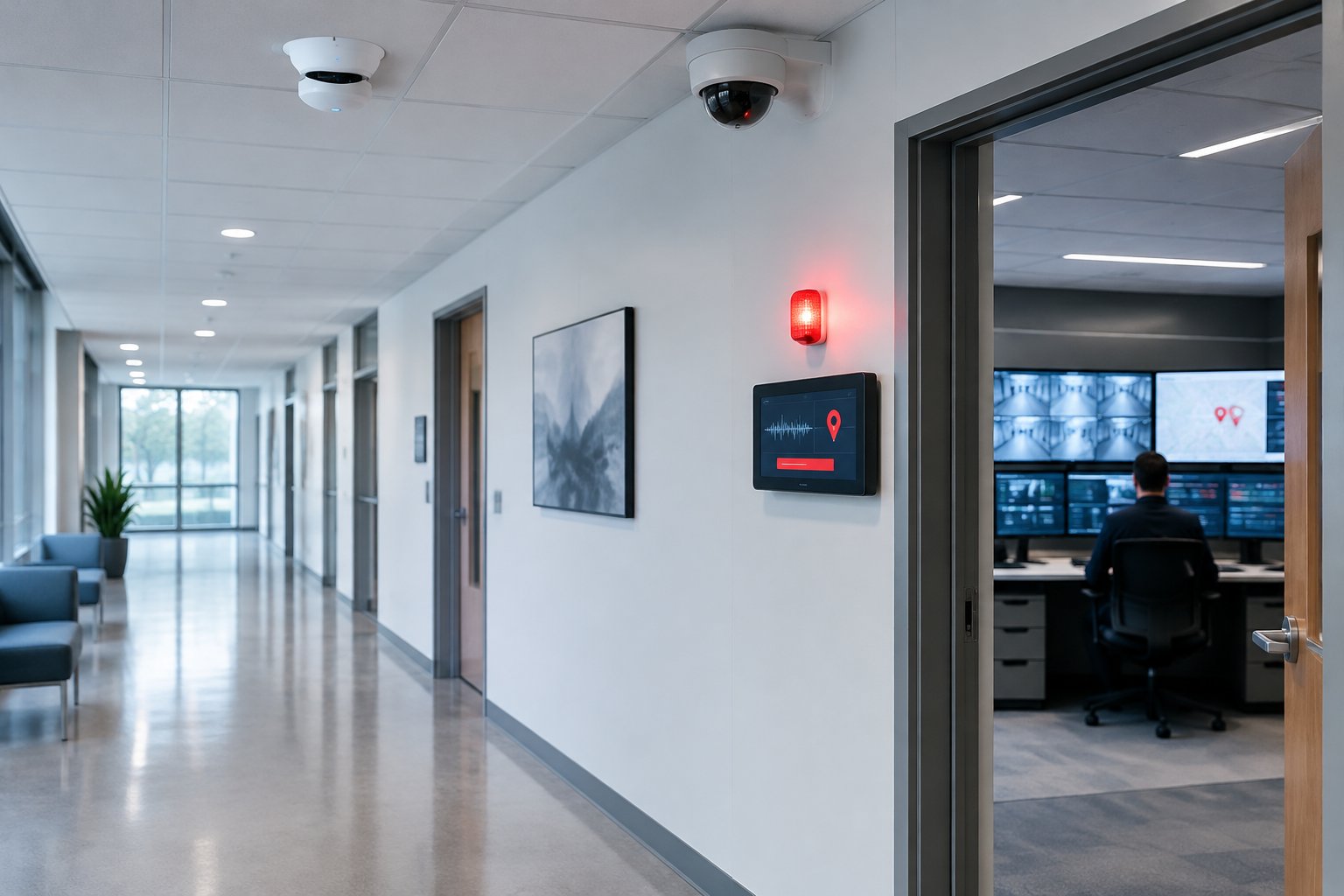
A tamper alert tells the monitoring center that someone opened or pried the box. That gives you a record when the fire department uses it and a warning if anyone else tries. Door and gate releases are outputs from the fire alarm that let people out and crews in.
Many buildings run card readers, mag locks and gate operators on systems separate from the fire alarm, and linking them correctly takes planning. Good access control and alarm system integration keeps each signal doing its own job, so a fire alarm releases the right doors and nothing else.
Keep the contents current
Every time you rekey a door or change your card system, the box needs an update. Outdated keys are one of the most common problems fire crews run into. Check that every key still opens its door, that the responder card still works after any database change, and that new doors have keys inside.
Card systems are where this usually slips. A software update or a new access schedule can cut off the responder card without anyone noticing, so tag that card as a protected credential that nobody deletes during a cleanup. Adding a box check to your routine maintenance list keeps it from being forgotten.
Get Emergency Access Right the First Time
A Knox Box only helps if it is approved, placed where crews expect it and stocked with keys and cards that still work. Alarm Masters has designed, installed and inspected fire and security systems across Texas since 1990, and our licensed team can handle the tamper monitoring, door releases and access control that make emergency entry work as intended. Call 281-933-3900 or request a free estimate and we will help you get it right before the fire marshal visits.
Frequently Asked Questions
Can anyone buy a Knox Box?
Property owners and managers buy them, but each order has to be approved by the local fire department. Knox only sells products your selected department supports, and without that approval the box will not be keyed to your local master key.
Do all Knox Boxes use the same key?
All boxes in one fire department's response area open with that department's master key. Different departments use different keys, so a box keyed for Houston will not open with a Pearland key.
Does a Knox Box work during a power outage?
Yes. The standard box uses a mechanical lock, so firefighters can open it with no power at all, which matters during hurricane season outages. A tamper switch reports through your fire alarm panel, which keeps running on its backup batteries while the power is out.
Can maintenance vendors use the Knox Box?
No. The box is reserved for emergency responders. Use a separate lockbox or issue access control credentials for scheduled maintenance crews.
Is a Knox Box the same as a real estate lockbox?
No. Realtor and contractor lockboxes open with a code or a widely issued key, so fire departments do not accept them for emergency access. A Knox Box is a heavier, rated enclosure keyed only to your fire department's master key, which is why the department has to approve the order.