.svg)
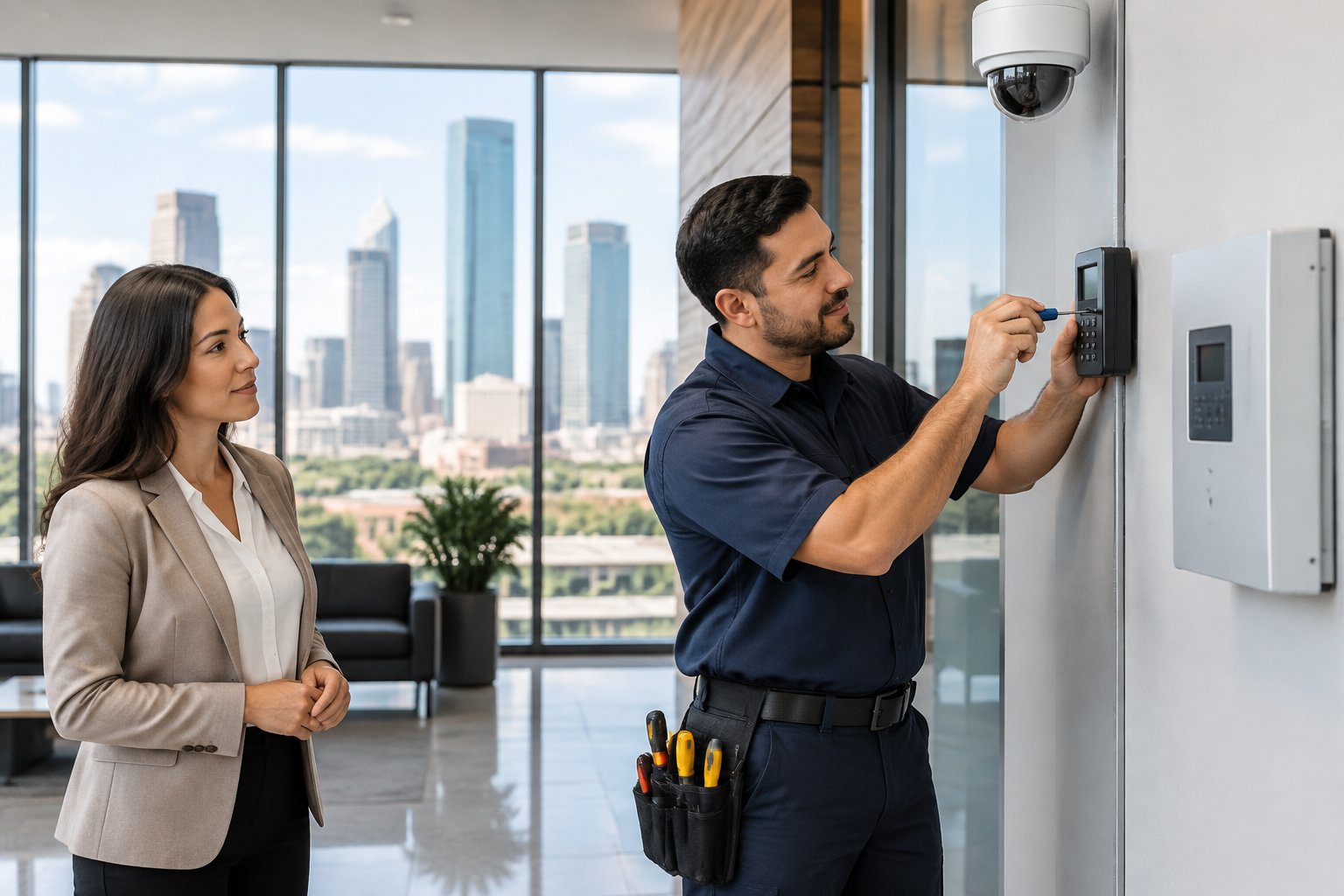
If your building's cameras went dark for three days last month and nobody noticed until a delivery went missing, you already know the feeling. Facility managers across Houston run into this all the time: a system that looks fine on the surface but hasn't been tested in months.
Most commercial security systems need professional service at least twice a year, and high-traffic or high-risk sites benefit from quarterly visits. That baseline holds whether you manage a single office building or a chain of warehouses along the Beltway. The right cadence depends on how hard your equipment works and what you stand to lose if it fails.
What Service Schedule Should Your Business Follow?
Your service schedule should combine monthly in-house checks with professional visits every three to six months, depending on your risk level. Skipping either layer creates blind spots that surface at the worst possible time.
Houston's climate adds pressure that milder markets don't face. Heat, humidity, and storm season push hardware harder than a typical maintenance guide accounts for, so gaps show up faster in wiring, batteries, and outdoor camera housings. A schedule built for a temperate office park often falls short here.
Facility managers who treat maintenance as a single annual event tend to discover problems only after something fails. A structured approach mixes tasks staff can handle with jobs that require licensed technicians and specialized diagnostic tools.
Monthly Checks Your Staff Can Handle
Your team can confirm cameras are online, recordings are active, and alarm panels show normal status without calling a technician. These checks take minutes and catch the most common early warning signs.
A monthly routine should confirm:
- Cameras are recording, and storage has available capacity
- Alarm panel status lights show no fault codes
- Access control readers respond correctly at each door
- Remote app access and mobile alerts still function
- Credential lists reflect current staff, with departed employees removed
Monthly reviews matter because security systems tend to degrade quietly rather than failing all at once. A camera that drifts out of focus or a hard drive nearing capacity won't trigger an alarm on its own.
When to Schedule Semiannual or Quarterly Professional Visits
Schedule a professional visit twice a year for standard commercial properties, and quarterly for warehouses, retail locations, or 24/7 operations. Higher foot traffic and higher-value inventory both raise the cost of an undetected failure.
Professional visits cover diagnostics your staff can't run safely, including panel firmware checks, signal strength verification to the monitoring center, and battery load testing. That cadence aligns with the maintenance expectations set out in NFPA 731, the national standard for installing and maintaining electronic premises security systems.
Facilities with heavy vibration, outdoor camera exposure, or multi-building campuses wear equipment faster and need shorter intervals between visits. Once you know which schedule fits your property, the next question is how maintenance needs shift depending on the equipment.
How Does Maintenance Vary by System Type?
Maintenance needs differ sharply between cameras, intrusion alarms, access control, and backup power, and treating them all the same leaves gaps. Each component fails in its own way and on its own timeline.
Facility managers who understand these differences can budget service visits more accurately and avoid paying for inspections their equipment doesn't need yet.
Cameras and Video Recorders
A well-maintained video surveillance system needs monthly health checks and quarterly physical inspections to stay reliable. Dust, humidity, and Houston's summer heat all degrade image quality faster than most owners expect.
Quarterly visits should include lens cleaning, mounting checks, and playback quality tests to confirm footage is actually usable in an investigation. Recorders deserve an annual review of storage retention and firmware, since hard drives have a limited service life and failure risk climbs the longer they run without replacement.
Intrusion Alarms and Monitoring Connections
Your intrusion alarm system needs monthly sensor tests from staff and a full professional inspection at least once a year, with many providers recommending twice. Signal transmission to your monitoring center is the piece most owners assume works until it doesn't.
A professional visit should verify panel diagnostics, battery replacement schedules, and communication pathway testing between the panel and the monitoring center. Skipping this step is the fastest way to end up with a system that looks armed but never actually reaches anyone.
Access Control Doors and Credentials
Your access control system needs monthly credential reviews and semiannual hardware testing on doors, readers, and locks. Former employees with active badges represent one of the most common and preventable security gaps.
A semiannual visit should test:
- Door readers and badge scanners for consistent response
- Electronic lock strikes and exit buttons
- Backup power at each controlled door
- Access logs for unusual entry patterns
Backup Batteries and Power Supplies
Backup batteries need quarterly load testing, since a battery that shows normal voltage at rest can still fail under real demand. Houston's storm season makes this the component with the highest real-world stakes.
Terminal corrosion and heat exposure shorten battery life faster than manufacturers estimate. Knowing what each component needs sets the stage for understanding what actually happens once a technician arrives on site.
What Happens During a Professional Service Visit?
A professional service inspection tests every component under real conditions, cleans equipment that affects performance, and checks software for outdated firmware. It goes well beyond confirming that lights are green on a panel.
Technicians typically walk the property first to compare how the space is actually used against how the system was originally configured. Layouts shift over time, and equipment doesn't adapt on its own, so camera angles or access permissions can quietly fall out of step with daily operations.
Testing, Cleaning and Software Checks
A thorough visit tests sensors, panels, and cameras under load, not just confirming they power on. Cleaning lenses, contacts, and mounting hardware prevents the slow image or signal degradation caused by dust and humidity.
Software checks confirm firmware is up to date across cameras, recorders, and access control platforms. Outdated firmware creates both reliability gaps and cybersecurity exposure, since unpatched systems are more vulnerable to unauthorized access attempts.
Finding Problems Before They Cause an Outage
The real value of a professional visit is catching small issues before they become expensive failures. A frayed wire, a mismatched firmware version, or a battery losing capacity rarely triggers an alarm on its own.
Technicians document each finding with a written report that becomes your record for future budgeting and repairs. That documentation matters just as much for insurance purposes as for planning your next equipment upgrade.
Which Records Should You Keep for Insurance and Audits?
Keep every service report, test result, and repair record on file, since insurers and auditors expect documented proof that you maintained your system. A verbal assurance that "someone checked it" carries no weight during a claim dispute.
Detailed records also protect you if an incident leads to a liability question. Insurers may specifically request proof of alarm testing and documentation of inspection history before honoring a claim tied to a break-in or theft.
Service Reports, Test Results and Repair Records
Every professional visit should end with a written report listing what was tested, what passed, and what needs repair. Store these reports together, whether digitally or in a physical file, so you can produce them quickly on short notice.
A complete record set should include:
- Dated service reports from each visit
- Battery replacement and load test results
- Firmware update logs for panels and cameras
- Repair invoices tied to specific findings
- Credential audit logs showing access changes over time
Why Fire Alarm Inspections Need a Separate Schedule
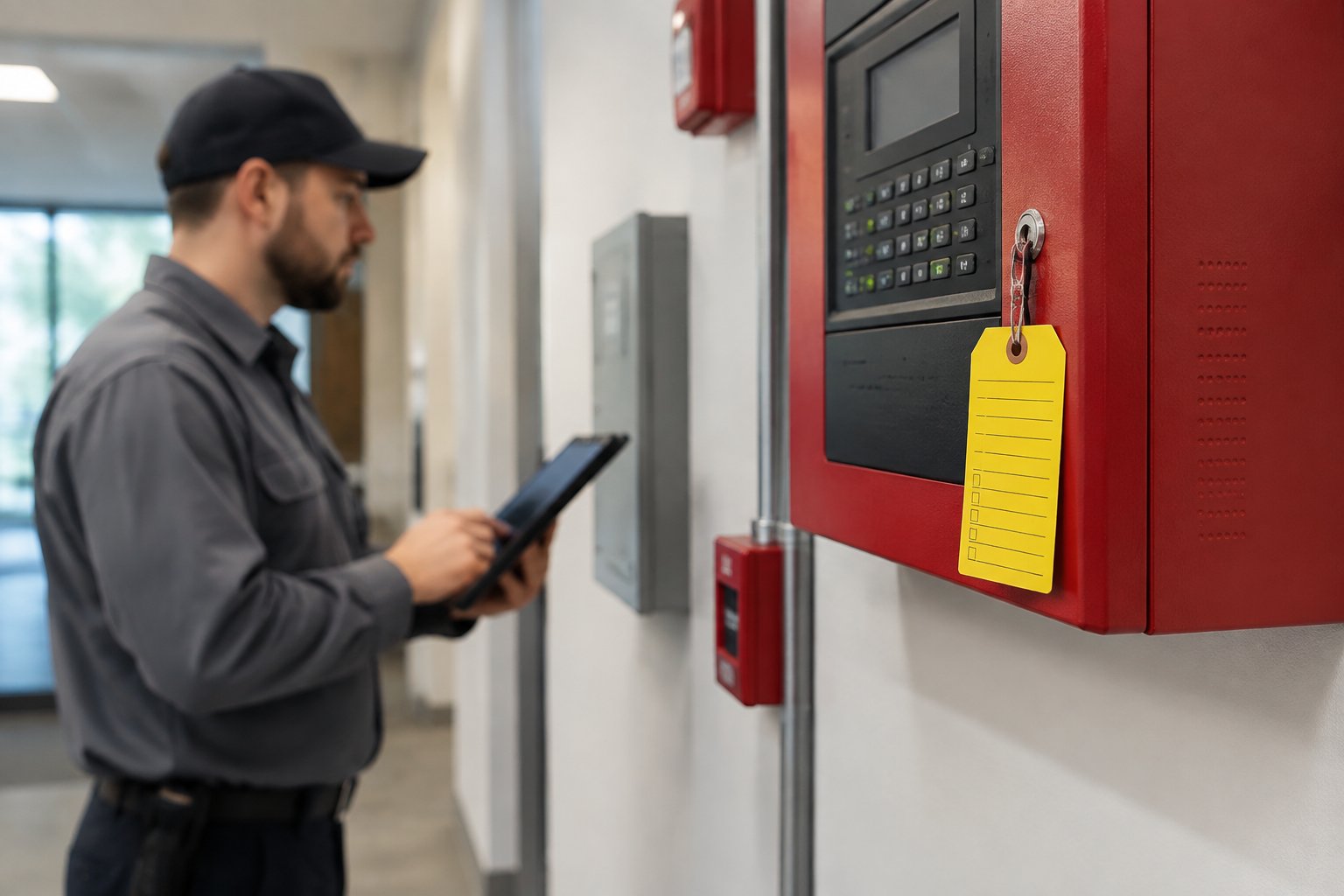
Your fire alarm system follows its own compliance schedule under Texas and NFPA 72 requirements, separate from your intrusion and camera maintenance plan. These are life safety systems, and Texas holds commercial properties to distinct inspection and documentation standards tied to fire code, not general security best practices.
Mixing fire alarm records with your security system's maintenance file creates confusion during an audit or fire marshal inspection. Keeping the two schedules distinct, with their own inspection dates and documentation, protects you on both fronts and sets up a cleaner path toward year-round protection.
Keep Your Houston Property Protected Between Visits
Consistent maintenance between professional visits keeps a commercial security system reliable, not the visits alone. The months between service calls are when small problems either get caught early or quietly grow into failures.
A property that follows monthly staff checks, seasonal professional visits, and organized recordkeeping puts itself in a strong position for both daily operations and insurance conversations. Houston's heat, humidity, and storm exposure make that discipline more important than in a milder climate.
Ready to find out what your property actually needs? Request a free estimate from Alarm Masters, and our licensed team will walk you through every option. Our technicians back every service visit with a 48-hour service guarantee, so repairs get scheduled fast instead of sitting on a waiting list.
Frequently Asked Questions
Is one professional service visit a year enough for a commercial security system?
One annual visit covers the minimum standard for low-risk offices with stable conditions and light foot traffic. Warehouses, retail stores, and 24/7 facilities benefit from quarterly visits since heavier use accelerates wear on cameras, sensors, and access hardware.
Can employees perform monthly security system checks?
Yes, staff can confirm cameras are recording, panels show normal status, and access credentials are current without special tools. Deeper diagnostics like battery load testing, firmware updates, and signal verification to the monitoring center require a licensed technician.
How often should a commercial intruder alarm be tested?
Staff should test sensors monthly, and a licensed technician should perform a full inspection at least once a year, with many providers recommending twice. That professional visit should confirm panel diagnostics, battery health, and communication pathways to the monitoring center.
Do commercial fire alarms follow the same inspection schedule?
No, fire alarm systems follow separate Texas and NFPA 72 inspection requirements tied to life safety code, not general security maintenance timing. Property owners should track fire alarm inspection dates independently from their intrusion and camera system schedule.
What should I do if a camera or backup battery fails between service visits?
Report the failure right away instead of waiting for the next scheduled visit, since an offline camera or dead battery leaves a real gap in coverage. A provider with a fast service guarantee can typically get a technician out within a couple of days to restore full protection.



.svg)


.svg)