Knowing how a fire alarm system works helps you keep your home or business safe. A fire alarm system detects smoke, heat or flames, warns everyone in the building and, when monitored, gets the fire department on the way while the fire is still small. Once you know the components and how they work together, it is much easier to keep your system ready.

A fire alarm system is a set of connected devices, including smoke detectors, heat detectors, pull stations, horns and strobes, all managed by a control panel. Together they identify signs of fire and deliver alerts, giving people time to get out and responders time to act.
Whether you are protecting a home or managing a business in the greater Houston area, understanding the basics helps you make good decisions about installation, monitoring and maintenance.
Fundamentals of Fire Alarm Systems
Fire alarm systems protect lives and property by giving early warning of fire. Here is what they do and what they are made of.
Role in Fire Protection
Fire alarm systems are designed to detect and respond to potential fires in a building. They serve four primary functions: detection, notification, control, and response.
Detection is achieved through initiating devices like smoke detectors and heat sensors. These devices identify the presence of smoke or excessive heat.
Once a threat is detected, the system activates notification appliances. These can include sirens, alarms, or visual indicators to alert occupants and enable timely evacuation.
The system also controls other building functions, such as closing fire doors, recalling elevators and shutting down air handlers, and it monitors the sprinkler system. Some special systems, such as preaction sprinklers or clean agent suppression, are released by a dedicated releasing panel.
Components Overview
A typical fire alarm system consists of several key components:
- Control Panel: The heart of the system, monitoring inputs from devices and managing alerts.
- Initiating Devices: These include smoke detectors and manual pull stations which trigger the alarm.
- Notification Appliances: This category encompasses alarms, sirens, and visual alerts that inform occupants of a fire emergency.
Fire alarm systems come in various types, such as conventional, addressable, and wireless systems. Each type has distinct advantages, depending on the specific fire protection needs and layout of your building.
Professional design, installation and maintenance make these components reliable. Work with a licensed fire alarm company that knows local codes in the greater Houston area.
Detection Devices
Detection devices identify the different signs of fire. Each type suits different spaces.
Smoke Detectors
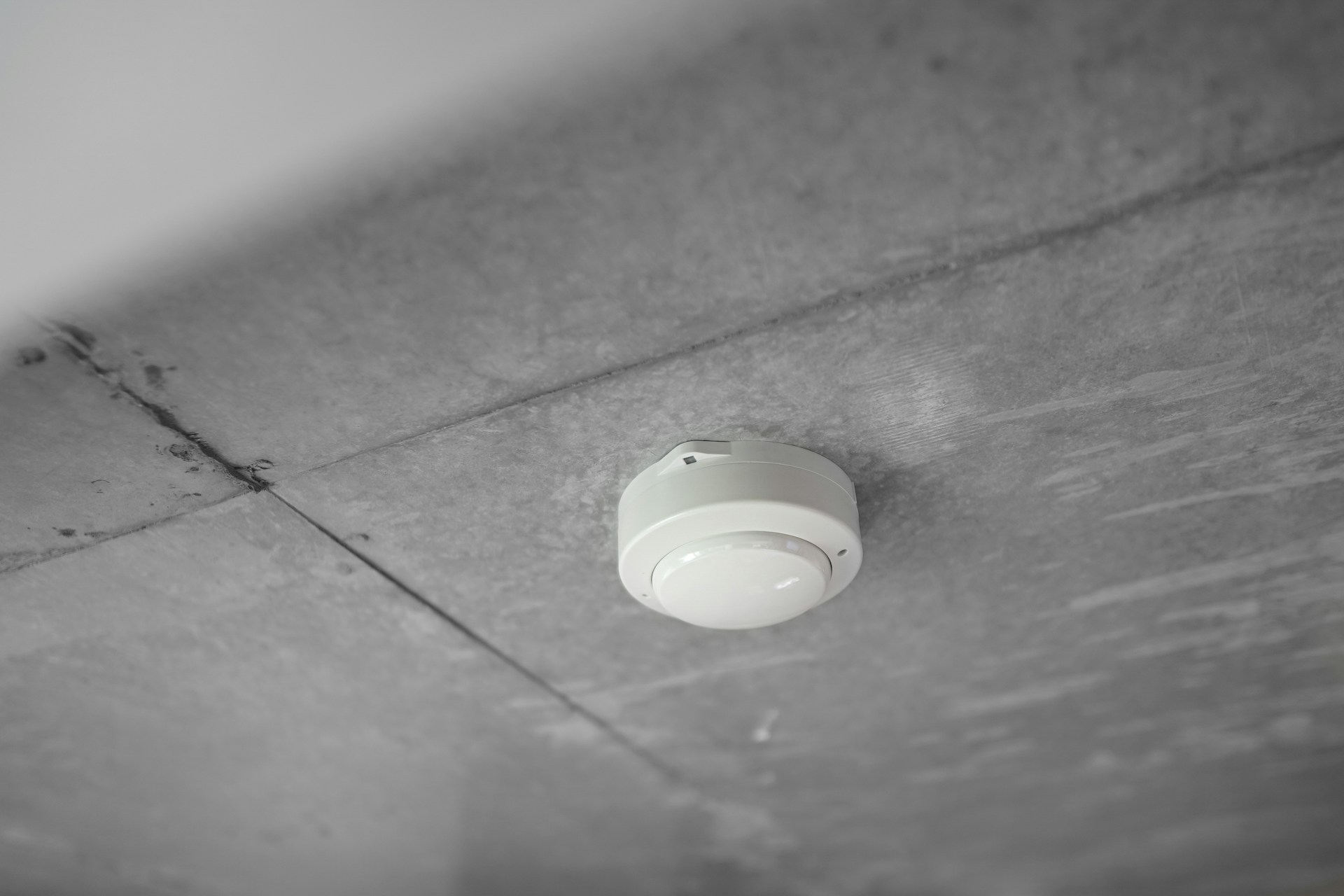
Smoke detectors are widely used in both residential and commercial settings. They operate by sensing smoke particles in the air, using one of two main technologies: ionization or photoelectric.
- Ionization smoke detectors react quickly to flaming fires but may be slower to detect smoldering fires.
- Photoelectric smoke detectors are more responsive to smoldering fires, which produce larger smoke particles.
Some units combine these technologies. In homes, smoke alarms belong in every bedroom, outside each sleeping area and on every level. In commercial buildings, detector locations follow the fire code and NFPA 72.
Heat Detectors
Heat detectors respond to changes in temperature rather than smoke. They are useful in environments where smoke detectors might cause false alarms, such as kitchens or garages.
Two primary types exist:
- Fixed temperature heat detectors trigger an alarm when they reach a predetermined temperature.
- Rate-of-rise heat detectors activate when they detect a rapid increase in temperature over time.
These detectors are often used in commercial settings and paired with other sensing devices to ensure comprehensive fire monitoring.
Flame Detectors
Flame detectors identify the infrared or ultraviolet radiation emitted by flames. They are typically used in industrial settings or areas where rapid fire detection is crucial.
Key types include:
- Infrared flame detectors, which capture infrared radiation from flames.
- Ultraviolet flame detectors, designed to sense UV light emitted during combustion.
These devices respond very quickly in high-risk locations, such as fuel handling areas and aircraft hangars.
Other Sensing Technologies
In addition to smoke, heat, and flame detectors, there are other sensing technologies worth considering:
- Duct detectors monitor air ducts for smoke, ensuring that smoke does not spread through HVAC systems.
- Manual fire alarm activation devices, such as pull stations, allow occupants to alert others manually in case of fire.
Combining the right devices for each area gives you the best protection. A licensed fire alarm designer can make sure your system is complete and complies with local regulations.
Alarm System Activation
A fire alarm can be activated by a person or automatically by a detector.
Manual Activation
You can manually activate a fire alarm system using manual pull stations. These are strategically located throughout a building, allowing occupants to pull a lever or press a button in case of a fire. Once activated, the system immediately goes into alarm mode.
Activating a pull station sends an alarm to the control panel, which triggers horns, speakers and strobe lights throughout the building. Pull stations are placed near exits, so it is worth knowing where they are in the buildings you use every day.
Automatic Activation
Automatic activation is what protects a building when no one is watching. This feature relies on various sensors, including smoke detectors and heat sensors. When these devices detect smoke or abnormal heat levels, they send a signal to the control panel.
The control panel processes the signal and activates the alarm system, resulting in the immediate sounding of alarm notification appliances. It responds even if no one is aware of the fire yet.
Alarm Notification Process
Once the alarm is activated, several notification devices spring into action. Sirens, bells, or visual alarms alert everyone within the area to evacuate. Alarm notification appliances are designed and placed so alerts can be heard and seen throughout the building, even in noisy areas, and many larger buildings use voice evacuation speakers to give clear instructions.
The alarm stays active until authorized staff or responders silence it, and the panel stays in alarm until the cause is cleared and the system is reset. This fast, clear notification helps everyone get out safely.
Power Supply and Control Units
Power supplies and control units keep your fire alarm system working, including during power outages.
Primary and Secondary Power
The primary power supply typically connects to the building's main electrical system. It provides the necessary voltage for the operation of the fire alarm system under normal conditions. It is usually on a dedicated, clearly marked circuit.
In the event of a power failure, a secondary power supply comes into play. This often consists of battery backups designed to engage automatically. Batteries ensure that alarm systems remain operational during outages, allowing for continued monitoring and alert capabilities. Batteries are tested during routine inspections and replaced as they age.
Fire Alarm Control Panel
The heart of your fire alarm system is the fire alarm control panel (FACP). This panel constantly monitors inputs from fire detection devices like smoke detectors and manual call points. Once it detects a potential fire or emergency condition, it activates the appropriate alarms and notifications.
The panel also supervises the wiring and devices, reports troubles and sends signals to the monitoring center. Regular maintenance keeps it reliable.
Remote Annunciator and Interfaces
A remote annunciator provides additional control and feedback options outside the main control panel. These devices display system status and can receive alarm signals, allowing for effective monitoring from various locations in your facility.
Interfaces with other building systems, such as access control that unlocks doors on alarm, help coordinate the response to emergencies. These connections should be tested as part of routine inspections.
How Your Fire Alarm Works With Other Building Systems
A fire alarm does more than sound a warning. When it is tied into other building systems, it can help contain a fire and get help on the way faster.
Fire Doors and Smoke Control
Fire doors divide a building into compartments that slow the spread of fire and smoke. When the alarm activates, the system can release door holders so these doors close automatically and protect exit routes. Integrated systems can also start smoke control equipment that clears smoke from escape paths, which keeps exits usable for longer.
Alerting the Fire Department Through Monitoring
In a monitored system, the alarm signal goes to a central station that alerts the fire department for you. This cuts the time between detection and response, especially when the building is empty or occupants are focused on getting out. It also helps to let your local fire department know about anything unusual about your building, such as a complex layout or a history of frequent false alarms.
Maintenance and Compliance
Maintenance keeps your fire alarm system ready for an emergency and helps prevent false alarms.
Regular Testing and Upkeep
Regular testing and maintenance matter. Commercial systems need inspection and testing at least once a year under NFPA 72 and local code, with some items checked more often. A licensed technician tests detectors, pull stations, notification appliances, batteries and the monitoring connection.
Document all tests and maintenance activities as this information is vital for compliance. Keeping a detailed log helps prevent future issues and ensures you have proof of adherence to safety protocols. Pay particular attention to issues like false alarms, which can often stem from outdated or improperly maintained equipment.
Compliance with NFPA Standards
The National Fire Protection Association (NFPA) standard NFPA 72 is the main guide for fire alarm systems. NFPA 72 outlines specific guidelines for installation, testing, and upkeep, ensuring your system meets life safety requirements.
Local jurisdictions adopt specific editions with their own amendments. Compliance protects lives and helps you avoid legal trouble, and partnering with a licensed fire alarm company that knows the rules where you are is the easiest way to stay compliant.
Frequently Asked Questions
Here are answers to common questions about how fire alarm systems work.
What are the components of a typical fire alarm system?
A typical fire alarm system includes several key components such as smoke detectors, heat detectors, a control panel, alarm notification devices, and manual pull stations.
Smoke detectors sense airborne particles from combustion, while heat detectors respond to temperature increases.
The control panel processes signals from these detectors and provides alerts to occupants through alarms and notification devices.
How do different types of fire alarm systems function?
There are several types of fire alarm systems, including conventional, addressable, and wireless systems.
Conventional systems categorize detectors into zones, while addressable systems provide individual identification for each device.
Wireless systems use radio communication between devices and the panel, which reduces wiring and suits buildings where running cable is difficult.
What triggers a fire alarm to activate?
A fire alarm can activate due to smoke, heat, or flames detected by its sensors.
Smoke detectors are triggered by particles from smoke, whereas heat detectors activate based on temperature thresholds.
Manual pull stations can also trigger alarms when activated by occupants.
How does one interpret the signals from a fire alarm system?
Understanding fire alarm signals involves recognizing the types of audible and visual alerts.
In an evacuation signal, horns typically sound a three-pulse temporal pattern, while voice systems give spoken instructions. At the panel, alarm, supervisory and trouble conditions are shown separately.
Familiarizing yourself with these signals is essential for an effective emergency response.
What is the step-by-step procedure for a fire alarm system operation?
When a fire alarm system operates, it generally follows these steps:
- Detection of smoke, heat, or fire.
- Sending a signal to the control panel.
- Activation of alarms and notification devices.
- Alerting occupants for evacuation.
- Notifying emergency services.
Each step aims to ensure a swift and organized response to fire threats.
Why is it crucial to have a fire alarm system in buildings?
Having a fire alarm system in buildings is essential for the safety of occupants.
It provides early detection, allowing more time for evacuation and response.
In many areas, fire alarm systems are not just recommended but required by local fire codes and regulations for buildings.
How does a monitored fire alarm system differ from an unmonitored one?
A monitored system is connected to a central station that can alert responders as soon as an alarm is triggered. An unmonitored system only sounds the alarm on site, so someone in the building has to call for help. Monitoring adds a layer of protection by making sure help is called even when no one is there.
Want a system you can count on? Alarm Masters designs, installs, monitors and inspects fire alarm systems for businesses and homes across greater Houston under Texas Fire Alarm License #ACR-1975, with 24/7 monitoring available. Request a free estimate or call 281-933-3900.