.svg)

A fire alarm system inspection is a thorough check of every part of your fire alarm, done to confirm it works correctly and meets current safety codes. Licensed technicians examine your smoke detectors, pull stations, notification devices, control panel, and backup power, making sure each part will perform during a real emergency.
If you own a home or business in the Houston area, a properly inspected fire alarm system is your first line of defense against fire-related injuries, property loss, and code violations. Inspections are required by NFPA 72, the National Fire Alarm and Signaling Code, and your local Texas fire authority expects documented proof that your life safety systems are tested on schedule. Whether you manage a single-family home in Spring or a commercial building in The Woodlands, knowing what happens during a fire alarm inspection helps you prepare and ask the right questions so your property stays protected year-round.
If you would rather have an expert handle it, our team makes the whole process painless. Schedule a professional fire alarm inspection and we will show up on time, test everything properly, and leave you with records you can trust.
What An Inspection Covers
A fire alarm system inspection has two main steps. First, technicians look at every part of the system for visible problems. Next, they test each device to confirm it actually works. This covers initiating devices like smoke detectors and pull stations, notification appliances like horns and strobes, the fire alarm control panel (FACP), and backup power sources.
Visual Checks Vs Functional Testing
Visual inspections come first. Your technician walks through the building and looks at each device and connection point, checking for physical damage, dust buildup, paint overspray, obstructions, and signs of tampering. These checks confirm that nothing obvious would prevent a device from working.
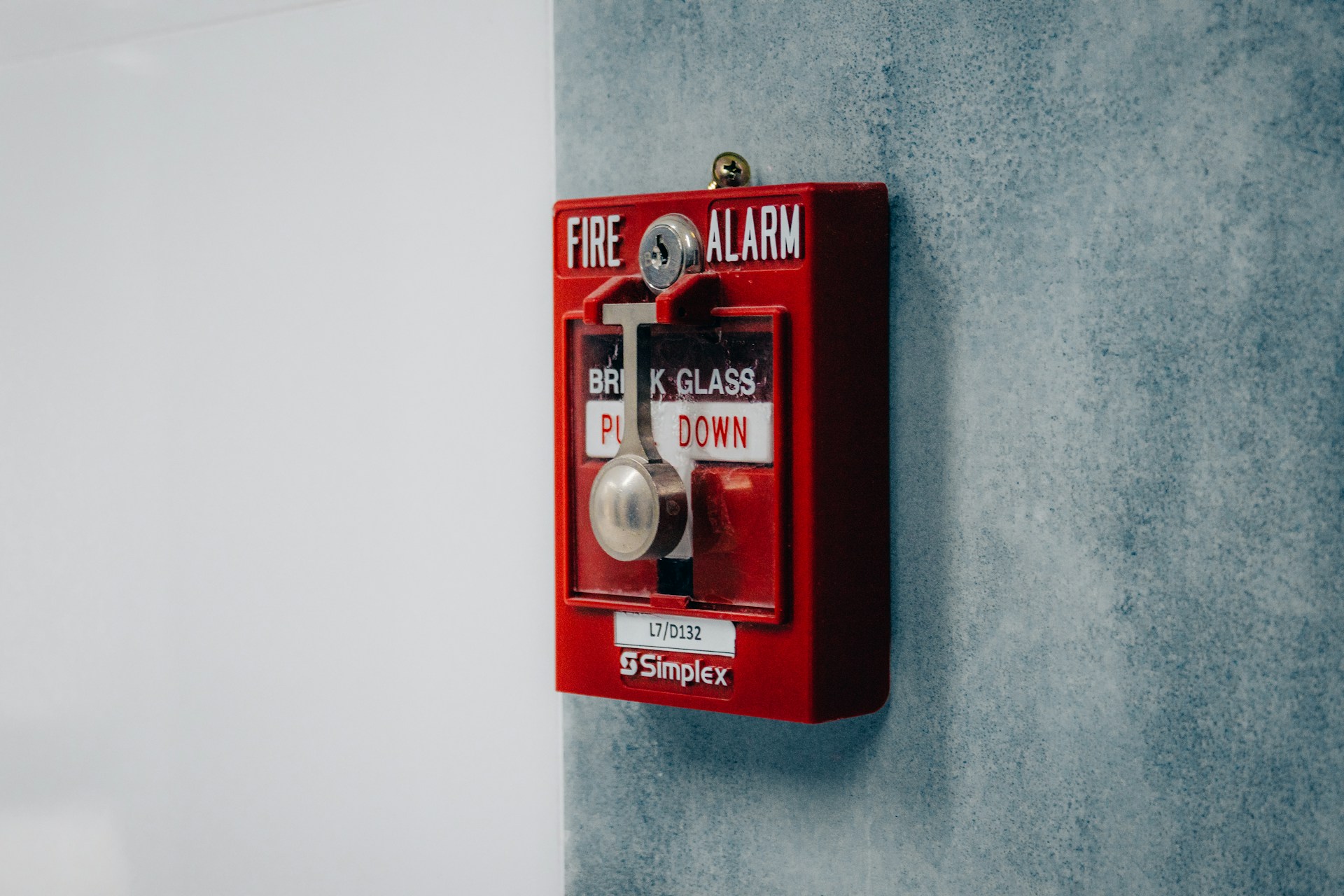
Functional testing goes further. The technician activates each device to verify it sends the correct signal to the control panel and triggers the right response. A smoke detector is tested with calibrated smoke or a special tool, a manual pull station is pulled, and horns, strobes, and speakers are activated to confirm they work as required. This blend of visual checks and hands-on testing gives you a full picture of your system's condition.
Core System Components Reviewed
Every inspection should cover these categories:
- Initiating devices: smoke detectors, heat detectors, manual pull stations
- Notification appliances: horns, strobes, speakers, other audible and visual devices
- Fire alarm control panel (FACP): display, error codes, communication
- Secondary power: batteries and backup supply
- Wiring and connections: secure, undamaged circuits
The technician documents the condition and test result for every component. Anything that fails or shows wear goes on the deficiency report.
Residential Vs Commercial Scope
For a typical Houston-area home, the inspection is straightforward. You may have a handful of smoke detectors, a control panel, and a monitoring connection, so the visit might take under an hour.
Commercial inspections are more involved. A multi-story office building, warehouse, or retail space in Houston or Spring could have hundreds of devices across multiple zones, and the scope often includes duct smoke detectors, elevator recall functions, fire phone systems, and PA speakers. Commercial systems also face stricter documentation requirements and more frequent inspection schedules under NFPA 72 and local Texas fire codes. If you are responsible for a larger property, our commercial fire and security services are built to handle that added complexity.
Why Regular Testing Matters
Routine fire alarm inspections protect people and keep you compliant with Texas fire codes and NFPA 72. Skipping scheduled testing puts lives at risk and can create legal and financial problems for property owners.
Life Safety And Early Warning
Your fire alarm system exists to detect a fire early and warn everyone inside. A smoke detector clogged with dust or a dead notification appliance will not do its job when seconds count, and regular inspections catch these problems before an emergency exposes them.
Fire alarm systems have many connected parts, and those parts degrade over time. Wiring loosens and batteries lose charge. Without scheduled testing, you simply cannot know whether your system will work during a fire.
Compliance, Liability, And Insurance
NFPA 72 sets clear inspection frequencies for every device and system component, and your local authority in Houston, Harris County, or surrounding Texas areas enforces these requirements. If your building fails a fire inspection or you cannot produce current testing records, you could face fines or denied permits.
Insurance carriers also look at your inspection history. A lapsed inspection schedule can give an insurer grounds to deny a claim after a fire, and skipping required NFPA 72 compliance testing can create serious liability if someone is injured.
Reducing False Alarms And Unexpected Failures
Dirty detectors, aging components, and ignored trouble signals are common causes of false alarms. False alarms waste fire department resources, disrupt your tenants or family, and in many Texas areas they can also lead to municipal fines. Regular testing catches small issues, like a drifting detector or an unnoticed panel error, before they cause false alarms or failures. Staying on schedule with your inspection frequency means fewer disruptions and a more reliable system.
How The Visit Typically Works
A fire alarm inspection follows a structured process. The technician coordinates with you ahead of time, activates and tests devices, and reviews the control panel before a final walkthrough.
Pre-Test Notifications And Site Preparation
Before testing, your technician should contact your monitoring company to place the system "on test." This prevents alarms from dispatching the fire department during testing. If you manage a commercial building, notify tenants, staff, and on-site security to avoid confusion or unnecessary evacuations.
Help the process go smoothly by making sure all fire alarm panels and devices are accessible. Move anything blocking pull stations, detectors, or notification appliances, and have your previous inspection records, as-built drawings, and zone maps ready for the technician.
Device Activation And Signal Verification
The technician works through the building zone by zone, activating each initiating device and confirming the correct response. Smoke detectors and pull stations are tested, and notification appliances are checked for proper sound and strobe patterns.
At the same time, the technician verifies that each activation sends the right signal to the fire alarm control panel and, if used, to the central station monitoring service. Trouble signals and supervisory devices are also tested to make sure the panel reports problems correctly.
Panel Review, Reset, And Final Walkthrough
After all devices are tested, the technician reviews the fire alarm control panel, checking for errors, verifying the panel display, and confirming the reset function. The system is then restored to normal operation.
A final walkthrough confirms that every device is back in its ready state and no zones are left in alarm or trouble. The technician documents everything and reviews the results with you, pointing out any deficiencies that need attention.
Key Devices And Functions Technicians Test
A thorough fire alarm system inspection covers more than smoke detectors and pull stations. It also includes specialty devices, interface functions, and backup power. The specific devices tested depend on whether you have a simple residential panel or a full commercial system.
Detectors, Pull Stations, And Waterflow Devices
- Smoke detectors are tested for proper alarm response. Sensitivity testing checks whether each detector falls within the manufacturer's listed range, and detectors outside this range are flagged for cleaning, recalibration, or replacement.
- Heat detectors are verified for correct operation, usually without using actual heat.
- Manual pull stations are physically activated to confirm they send an alarm signal to the panel.
- Duct smoke detectors are tested at each air handling unit to confirm they detect smoke in the HVAC ductwork and trigger the right response.
- Waterflow switches on sprinkler systems are tripped to verify they send an alarm signal when water moves through the pipe.
Notification, Voice, And Interface Functions
Your technician tests every device that alerts people or connects to other building systems.
- Horns, strobes, and speakers are activated to confirm proper sound level and flash rate.
- Emergency communications systems and voice panels are tested for clarity and coverage.
- Door holders are checked to confirm they release doors on alarm.
- Elevator recall is tested to confirm elevators return to the correct floor during a fire alarm.
- Kitchen hood suppression interface devices, common in Houston-area restaurants, are checked to confirm they send a signal to the fire alarm panel when the suppression system activates.
- Fire alarm panels and networked sub-panels are checked for proper communication.
Batteries, Backup Power, And Monitoring Paths
Battery testing is a critical part of every inspection. Your technician performs a battery load test to confirm backup batteries can sustain the system during a power outage for the required time, and weak or expired batteries get flagged for replacement.
The monitoring communication path is also checked. Whether your system uses a phone line, cellular communicator, or network connection to reach the central station, the technician confirms the signal gets through. If your system still uses a traditional phone line, it is worth asking about upgrading to 24/7 alarm monitoring over a cellular path for more reliable coverage.
Documentation, Code, And Required Records
Proper documentation protects you during inspections by your local authority, during insurance audits, and in liability situations. NFPA 72 spells out what records you need and how long to keep them.
NFPA 72 Chapter 14 Basics
NFPA 72 Chapter 14 governs inspection, testing, and maintenance requirements for fire alarm systems. It defines how often each device must be inspected and tested, what methods are acceptable, and what documentation must be produced after each visit.
Chapter 14 applies to every fire alarm system in Texas, whether in a home, apartment, office, or warehouse. Your local authority enforces NFPA 72 as part of the adopted fire code and will ask to see your records.
Reports, Records, And Inspection Forms
After every fire alarm inspection, your technician should provide a written report that includes:
- An inspection and testing form listing every device tested and its pass/fail result
- A fire alarm system inspection checklist covering all system components
- Notes on any deficiencies, recommended repairs, or code concerns
- The date, technician name, and license information
These inspection records become part of your permanent building file. Many Texas jurisdictions require you to keep them available for review by the fire marshal or authority at any time.
What Owners Should Keep On File
As a building owner, you are responsible for maintaining a complete set of fire alarm documentation. At a minimum, keep the following on hand:
- Record of completion from the original system installation
- As-built drawings showing device locations and wiring
- Zone maps identifying each alarm zone
- All previous inspection and testing reports
- Records of any repairs, modifications, or upgrades
For commercial properties, NFPA 25 may also apply if your building has a sprinkler system. Keeping fire alarm and sprinkler records organized in one location makes compliance easier and speeds up future inspections.
Common Problems And When To Call A Licensed Pro
Even well-maintained fire alarm systems develop issues over time. Knowing what problems to watch for, and when to call a certified technician, helps you stay ahead of failures and code violations.
Issues Often Found During Service
Common problems found during fire alarm inspections in the Houston area include:
- Dirty or obstructed smoke detectors that are out of sensitivity range
- Dead or weak backup batteries that will not sustain the system during a power outage
- Control panel errors or unresolved trouble signals
- Paint, dust, or debris covering detectors or notification appliances after renovations
- Outdated or discontinued components that do not meet current code
- Improper device placement where furniture, storage, or remodeling blocks detection coverage
- Missing or incomplete documentation from previous inspections
Many of these issues are simple to fix if caught early. Left unaddressed, they can cause a failed inspection, a false alarm, or a real failure during an emergency. A well-designed fire alarm system paired with regular testing keeps most of these problems from ever reaching that point.
Questions To Ask Before Hiring An Inspector
Not all inspection companies deliver the same quality of work. Before you hire someone, ask:
- Are your technicians licensed in the State of Texas?
- Do you carry the proper insurance and bonding?
- Will you provide a written report that meets NFPA 72 Chapter 14 requirements?
- Can you handle repairs on site if you find a problem?
- Do you notify my central station monitoring service before testing?
- What system and panel types are you trained on?
A qualified fire alarm inspection company should answer all of these questions directly.
When Repairs, Upgrades, Or Monitoring Changes Make Sense
Recurring trouble signals, failed devices, or smoke detector sensitivity readings outside the acceptable range mean you may need more than a simple repair. Older systems with discontinued parts can be expensive to maintain, and at some point upgrading the system becomes the more practical and reliable option.
If your building layout, occupancy type, or local code requirements change, you may also need an upgrade. And if your system still uses a traditional phone line, switching to a cellular communicator improves reliability and removes a common failure point. A licensed professional can explain your options and help you decide what works best for your property.
Your fire alarm system deserves a team that treats your safety like its own. Alarm Masters has served Houston, Spring, The Woodlands, and greater Texas since 1990, and our licensed technicians will handle your inspection with care. Call 281-933-3900 or request a free, no-obligation estimate to get on the schedule.
Frequently Asked Questions
How often should fire alarm systems be inspected and tested?
NFPA 72 sets different schedules depending on the device. On a monitored system, most initiating devices, notification appliances, and control panel functions are tested annually, though some quick visual checks happen more often. Smoke detector sensitivity is checked within the first year, then every other year, and only stretched toward a five-year maximum once two consecutive tests confirm the detectors are still in range. Your local fire marshal or inspector in Texas may require additional checks, so always confirm local rules.
What does a typical fire alarm inspection include?
A typical inspection covers visual checks of all system parts, functional testing of every detector and notification device, a battery load test, and a review of the control panel. The technician also verifies monitoring communication paths, and you will get a written report listing results and any issues found.
Which codes and standards govern fire alarm inspections (e.g., NFPA 72)?
NFPA 72, the National Fire Alarm and Signaling Code, is the main standard in the U.S., and Chapter 14 covers inspection, testing, and maintenance. Texas adopts NFPA 72 in local fire codes, and the authority having jurisdiction enforces compliance.
How long does an inspection usually take for a home, apartment, or commercial building?
A residential inspection may take less than an hour. Apartment buildings and small commercial spaces usually need a few hours, while large commercial buildings with many devices can take a full day or more.
What documents and reports should be provided after the inspection and testing?
Your inspector should give you a completed inspection and testing form, a detailed deficiency report if there are problems, and documentation for every device tested with its pass or fail result. These records should meet NFPA 72 Chapter 14 requirements and stay in your permanent building file.
Do I need a certified technician (e.g., NICET) to perform the inspection and maintenance?
Texas law requires licensed technicians for fire alarm inspection work. NICET certification is respected in the industry, but your local Authority Having Jurisdiction (AHJ) sets the licensing rules. Always check that your inspector has the right Texas state license and insurance before they start.


.svg)


.svg)