.svg)
Choosing the right home security system in Houston is more than just picking a brand you've seen on TV. The city has a wide range of neighborhoods, property sizes, and crime patterns, which means what works for a home in Katy might not be the right fit for a townhouse in Midtown.
That context matters when you're deciding what to install. Houston homeowners have more solid options today than ever before, from flexible DIY kits to fully custom professional setups with round-the-clock monitoring.
Each path has real trade-offs worth knowing before you commit. Whether you're a first-time buyer or upgrading outdated equipment, Alarm Masters can help you sort through the options that make sense for your home. This guide covers everything you need to make a confident decision.
How To Choose The Right Setup For Your Home
Whether you go with a basic starter kit or a fully monitored system, three decisions will shape your experience: who installs it, who watches it, and whether a packaged system actually fits your home's layout.
DIY Vs Professional Installation
A DIY home security system gives you flexibility and lower upfront costs. You order the kit, follow the instructions, and place sensors yourself.
Some brands make this process straightforward, and you're not locked into a long-term contract from the start. Professional installation takes that burden completely off your hands.
A certified technician visits your home, maps out sensor placement, and makes sure everything communicates properly with your control panel. For larger Houston homes or layouts with multiple entry points, that hands-on setup makes a real difference in coverage.
The trade-off is time versus precision. DIY works well for smaller spaces with simple layouts. If your home has a garage, detached structure, or multiple floors, professional installation is usually worth the extra cost.
Self-Monitoring Vs Professional Monitoring
Self-monitoring means you receive alerts directly on your phone and decide what to do next. That could mean calling a neighbor, checking your live camera feed, or calling 911 yourself.
It works, but it puts the full responsibility on you. Professional monitoring connects your system to a 24/7 monitoring station staffed by trained agents.
When an alarm triggers, they attempt to reach you first, then dispatch emergency services if needed. Some companies offer this layer of coverage, which is especially valuable when you're traveling or unavailable.
Alarm monitoring is worth the monthly fee for most Houston homeowners. The cost is usually between $15 and $50 per month, and the added off-hours response coverage is difficult to replicate on your own.
When A Custom System Makes More Sense Than A Starter Kit
Starter kits are designed for average-sized homes with standard layouts. If your property is larger than about 2,000 square feet, has a long driveway, or includes a backyard with multiple access points, a packaged system likely won't cover everything.
Home security companies that offer custom setups will assess your specific property and recommend the right mix of sensors, cameras, and detectors. That means no blind spots and no gaps in your coverage.
A custom system also scales more easily as your needs change, which most starter kits can't accommodate well.
The Core Equipment That Actually Protects Your Property
Your alarm system is only as effective as the hardware behind it. A strong setup layers control panels, entry sensors, motion detectors, and life-safety devices so that every part of your home is covered, not just the front door.
Control Panels, Door Contacts, And Window Sensors
The control panel is the brain of your home alarm system. It receives signals from every connected sensor and either triggers an alarm, sends an alert, or both.
Modern panels are typically touchscreen-based and allow you to arm or disarm your system with a code, a key fob, or an app. Door contacts and window sensors are your first line of defense.
These small devices attach to the frame and the door or window itself, and they send an alert the moment that contact is broken. Every exterior door and ground-floor window should have one, which is a detail that starter kits sometimes miss on larger homes.
These components form the foundation of any reliable burglar alarm system. Without them, cameras and motion sensors are working without backup.
Motion Sensors, Motion Detectors, And Intrusion Detection
Motion detectors cover areas that door and window sensors can't, like hallways, living rooms, and open floor plans. Once someone is inside your home, a well-placed motion sensor is what triggers the alarm and alerts your monitoring station.
Passive infrared (PIR) sensors are the most common type. They detect changes in heat signatures as a person moves through a space.
For Houston homes with pets, you can find pet-immune motion sensors that reduce false alarms from animals under 80 pounds. Intrusion detection becomes most effective when motion sensors work alongside your other devices in a single integrated system.
That way, one triggered sensor can activate cameras, sound sirens, and notify your alarm monitoring service all at once.
Fire Alarm Systems And Life-Safety Add-Ons
A full security alarm system should protect you from more than break-ins. Fire alarm systems, smoke detectors, carbon monoxide sensors, and flood detectors are life-safety add-ons that many homeowners overlook until they need them.
In Houston, where heavy rains and flooding are a real seasonal concern, water sensors placed near water heaters, under sinks, and in garages can prevent thousands of dollars in damage by alerting you early.
Fire alarms integrated into your main system can also automatically notify your monitoring station, even if you're asleep or away. These add-ons don't cost much to include during initial installation. The protection they offer goes well beyond what a basic burglar alarm covers.
Cameras, Doorbells, And Video Coverage That Adds Real Visibility
Video is one of the most useful layers you can add to any home security setup. Knowing where to place cameras, how to use a doorbell camera effectively, and what recording options you actually need will help you get real value from your investment.
Home Security Cameras And Security Camera Installation
Home security cameras serve two purposes: deterrence and documentation. A visible camera near your garage or front entry often discourages a potential intruder before anything happens.
If something does happen, recorded footage gives law enforcement something concrete to work with. The placement of security camera installations matters more than the number of cameras you have.
A few well-positioned cameras covering entry points, driveways, and backyard gates will outperform a larger number of poorly placed units. For Houston homes with wide lots or fenced backyards, a professional installation assessment helps identify the angles that matter most.
Look for cameras with at least 1080p resolution, night vision, and weatherproof housing. Houston's humidity and summer storms make weather resistance a non-negotiable feature.
Video Doorbells For Front Entry Awareness
A video doorbell gives you eyes on your front entry without requiring a full camera setup. You can see who's approaching, speak to delivery drivers remotely, and get a motion alert before anyone even rings the bell.
Most video doorbells connect to your home's WiFi and send alerts to your phone in real time. For Houston neighborhoods, this front-door visibility is genuinely useful day to day.
Models with wide-angle lenses capture more of your porch and driveway, giving you better context on who's there. Pair your video doorbell with a nearby camera for full coverage of the front entry zone. That combination covers approaches from multiple angles.
Live Video, Continuous Recording, And Smarter Video Monitoring
Live video lets you check in on your home from anywhere using your phone. That's useful when you get an alert and want to see what triggered it before deciding whether to call for help.
Continuous video recording stores footage around the clock, usually in the cloud. That means even if a camera is moved or damaged, the footage already uploaded is still accessible.
Some systems also offer motion-triggered recording to save storage space while still capturing key events. Video monitoring through a professional service adds another layer.
Some providers offer live video verification, where a monitoring agent reviews camera footage before dispatching emergency services. That reduces false-alarm dispatches and gives you more confidence that real events receive a real response.
Smart Features That Make Daily Use Easier
The most used home security systems are the ones that fit naturally into your daily routine. Smart locks, automation routines, and mobile access all make security something you actually use, not just something that sits in the background.
Smart Locks And Access Control At Entry Points
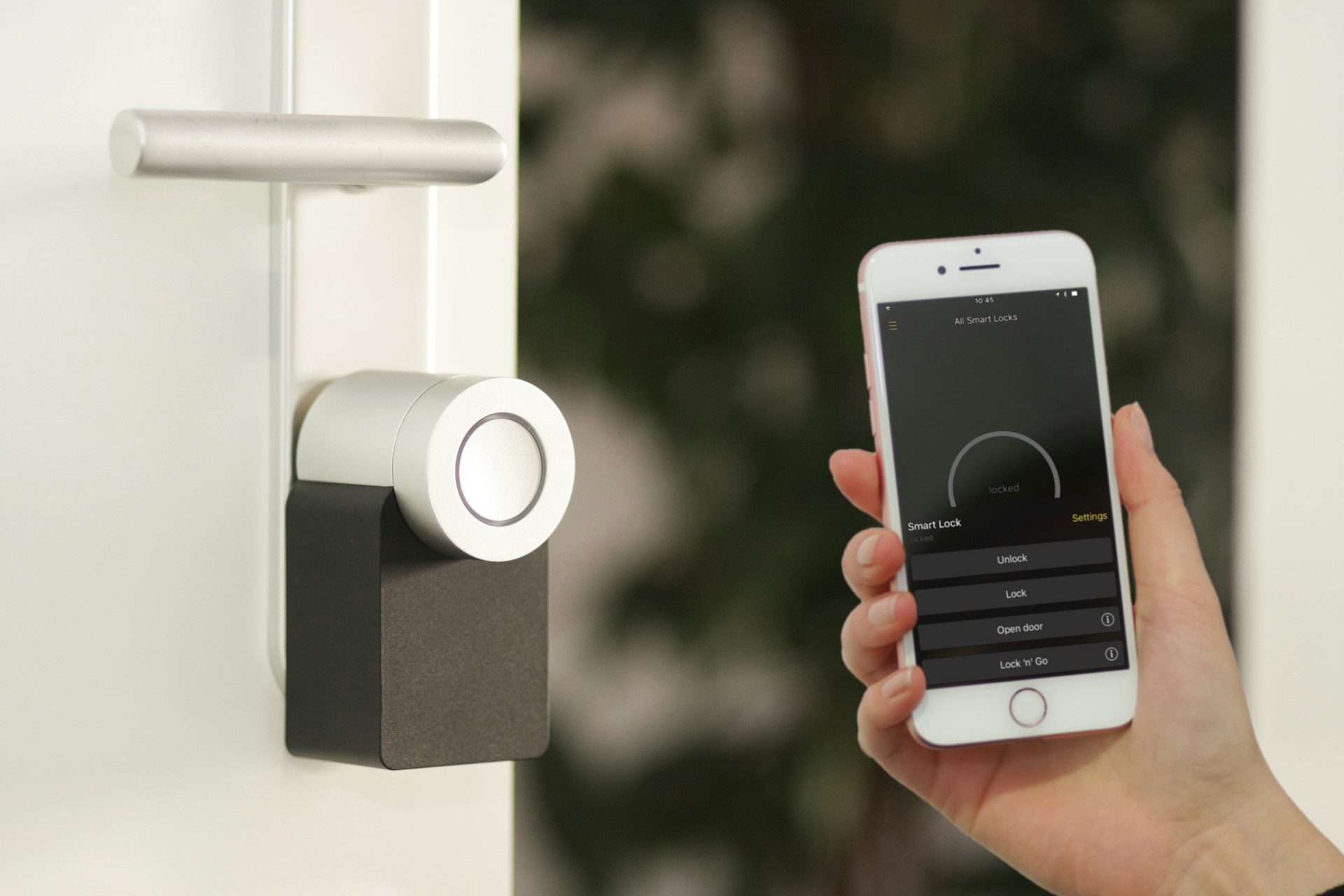
Smart locks replace your traditional deadbolt with a keypad, fingerprint reader, or app-controlled lock. You can grant access to a house cleaner, dog walker, or family member without ever cutting a key.
Each code can be unique and set with time restrictions, so access is controlled precisely. From a security standpoint, smart locks eliminate the risk of lost or copied keys.
In Houston, where short-term rentals and shared homes are common, that kind of access control is practical and easy to manage. You can also check the lock status remotely and lock your door from anywhere.
When paired with your alarm system, a smart lock can automatically arm your system when you lock up for the night.
Smart Home Integration And Automation Routines
Smart home integration connects your security system to other devices in your home, including lights, thermostats, and garage door openers. That lets you create automation routines that make your home look occupied even when you're away, which is a genuine deterrent.
For example, you can set lights to turn on at sunset, have your garage door close automatically at a set time, and receive an alert if any sensor triggers outside of normal hours. These routines run in the background without requiring you to manage each device manually.
Home automation also improves energy efficiency alongside security. That's a practical bonus in a city where summer cooling costs are high.
Mobile Alerts, Remote Access, And App Control
A smartphone app ties your entire system together. You can arm and disarm your system, view live camera feeds, check sensor status, and receive instant alerts from one central place.
That kind of remote access is useful whether you're at work in Downtown Houston or traveling out of state. Good app control also means fewer false alarm headaches.
If an alert triggers, you can review what happened before deciding on a response. That saves you unnecessary trips home and reduces the risk of a costly false-alarm dispatch.
Look for a provider whose app is regularly updated and well-reviewed. A security system is only as convenient as the software you use to control it every day.
Comparing Houston Providers Without Getting Overwhelmed
Shopping for Houston home security can quickly feel overwhelming, but focusing on a few key factors helps you separate strong providers from those that will frustrate you later. Knowing what to ask about service, contracts, and coverage type puts you in a much better position before you sign anything.
What To Look For In Local Service And Support
Local service and support matter more than most people realize until something goes wrong. A national brand with no technicians in Houston means longer repair wait times and less flexibility when you need a system adjustment.
Look for providers with a documented service area in Houston, local installation teams, and a clear process for handling service calls. Customer reviews on platforms like Angi or Google give you a realistic picture of how quickly a provider responds to issues and how knowledgeable their technicians are.
A company that monitors your system 24/7 but can't send a technician within 48 hours isn't giving you the full picture of what home security actually requires.
Questions To Ask About Contracts, Monitoring, And Upgrades
Before signing up with any home security company, ask these specific questions:
- How long is the contract? Many providers require 24 to 36 months.
- What is the monthly monitoring fee, and does it increase over time?
- Can you upgrade your equipment mid-contract, and is there a cost?
- What happens to your equipment if you cancel early?
- Is professional monitoring included, or is it a separate add-on?
These questions will reveal a lot about how the company operates. A provider that is transparent about cancellation terms and equipment ownership is almost always easier to work with in the long term.
Residential Security Vs Commercial Security Needs
Residential and commercial security share some equipment, but the scope and complexity differ significantly. A home security system is designed around a smaller footprint, fewer access points, and personal use.
Commercial security often requires access control for multiple employees, higher-capacity camera systems, and more sophisticated alarm monitoring setups. If you run a home-based business in Houston, mention that to your provider.
Some companies offer systems that bridge both needs. That means you can get residential simplicity with commercial-grade coverage where your business assets are stored. Choosing a provider that specializes in your actual property type gives you a more accurate system design and typically better support down the line.
Frequently Asked Questions
Finding the right home security system comes down to knowing what questions to ask. The answers below address the most common concerns Houston homeowners have before choosing a system or provider.
What features should I look for in a home security system for a house versus an apartment?
For a house, prioritize door and window sensors for every entry point, outdoor cameras, and motion detectors covering interior zones and the yard. In an apartment, focus on front door sensors, a video doorbell, and a system that doesn't require drilling or permanent installation.
Many apartment-friendly systems use wireless components that are easy to remove when you move.
How do I compare local alarm companies to find the best fit for my neighborhood?
Start by checking Google and Angi reviews specifically mentioning your part of Houston, since response times and service quality can vary by area. Ask each company whether they have local technicians based in the city and how long their average service call takes.
A provider active in your specific neighborhood will usually be more familiar with local crime patterns and property layouts.
What do customer reviews usually reveal about installation quality and response times?
Reviews most often flag two things: whether the technician showed up on time and set up the system correctly, and how quickly the monitoring station responded during a real alarm. Patterns across multiple reviews are more reliable than individual ratings.
Look specifically for mentions of false alarm handling and whether the company was easy to reach after installation.
Are there any legit ways to get discounted or promotional security equipment without sacrificing reliability?
Many home security companies offer promotional pricing on equipment when you agree to a monitoring contract, which can significantly reduce upfront costs. Some providers also offer discounts on installation fees for larger systems or for referrals.
Just make sure the promotional deal doesn't lock you into a higher monthly rate or a longer contract than you're comfortable with.
What's typically included in professional monitoring, and is it worth it compared to self-monitoring?
Professional monitoring includes 24/7 coverage from a staffed monitoring station that contacts you and dispatches emergency services when an alarm is triggered. Unlike self-monitoring, it responds even when you're asleep, unavailable, or out of cell range.
What questions should I ask about contracts, cancellation fees, and equipment ownership before signing up?
Ask directly: how long is the contract, what is the early termination fee, and do you own the equipment or lease it? Also ask whether the equipment works independently if you cancel monitoring or switch providers.
Some companies lock you into proprietary hardware that stops functioning without their specific service, which limits your flexibility later.
Making The Right Call For Your Home
Picking the right home security system in Houston isn't about finding the most expensive option or the one with the most brand recognition. It's about matching your property's size, layout, and daily routine to a setup that actually covers your vulnerabilities without creating unnecessary complexity.
Start with the basics: solid entry sensors, at least one outdoor camera, and a monitoring plan that fits your schedule. Then build from there with smart locks, video doorbells, and life-safety devices as your needs grow.
When you're ready to take the next step, Alarm Masters is here to help you put together a system that fits your home and your budget. Go ahead and request a free no-obligation estimate and get a clear picture of what real, reliable protection looks like for your Houston home\



.svg)


.svg)